



Most roulette players rely on luck. The casinos, meanwhile, rely on luck's master, math. But over the years, a few gamblers have tried to flip the odds through skill, by studying dealer habits, tracking the physics of the wheel, or hunting for mechanical flaws.
Some methods actually worked, at least for a while. This guide breaks down four prediction strategies – dealer signatures, visual tracking, computer prediction, and biased wheels - and whether any of them can still beat the house edge.
American vs European Roulette: House Edge Comparison
Before exploring prediction methods, understand what you're up against:
| Feature | American Wheel | European Wheel |
| Numbers | 38 (0, 00, 1-36) | 37 (0, 1-36) |
| House Edge | 5.26% | 2.70% |
| Expected Loss per $100 | $5.26 | $2.70 |
The European roulette wheel offers better roulette odds for any roulette number prediction strategy.
Can Dealer Signatures Beat Roulette?
A dealer signature occurs when a croupier unconsciously spins the ball with consistent speed and release, causing it to land a predictable distance from the previous number. The theory: if you can identify this pattern, you can bet on a sector of the wheel rather than random numbers.
In the early 1990s, some dealers claimed sector slicing was possible, but it’s something that most dismiss nowadays. As one dealer told me:
"The wheels are just too perfect. The pockets are too shallow for the ball to stay where you think it should go. In my opinion, it just isn’t possible anymore.”
How to attempt it:
- Learn the wheel layout (numbers aren't sequential)
- Clock at least five spins to identify patterns
- Track the distance between consecutive hits
- If the ball hits a bumper, start over. The result becomes random
- Bet on 6-8 adjacent pockets
| Pros | Cons |
| Legal in all casinos | Modern wheels designed to prevent it |
| No equipment needed | Requires extensive observation |
| Low risk to try | Bumpers randomize results frequently |
Visual Prediction: Does It Work?
Visual prediction involves calculating where the ball will land by analyzing the wheel's speed relative to the ball's trajectory. The theory relies on physics: all balls slow to similar speeds due to friction before dropping into pockets.
I tried this method extensively in casinos in the 1990s and failed miserably. About a dozen acquaintances fared just as poorly. The process involves tracking a spinning wheel while watching a spinning ball. Headaches and nausea are common side effects.
The physics: At the end of their journey, balls fall at roughly the same speed regardless of initial velocity. You must estimate bounce patterns and bet before the ball drops.
| Pros | Cons |
| Based on real physics | Extremely difficult to execute |
| Legal everywhere | Bumpers disrupt predictions |
| No cost to attempt | Often causes physical discomfort |
Do I think such a technique will work? It is conceivable but highly unlikely. Still, you have nothing to lose by trying to play this way. If there is no such thing as dealer signatures, then you are playing a typical random game, a game you would have been playing anyway.
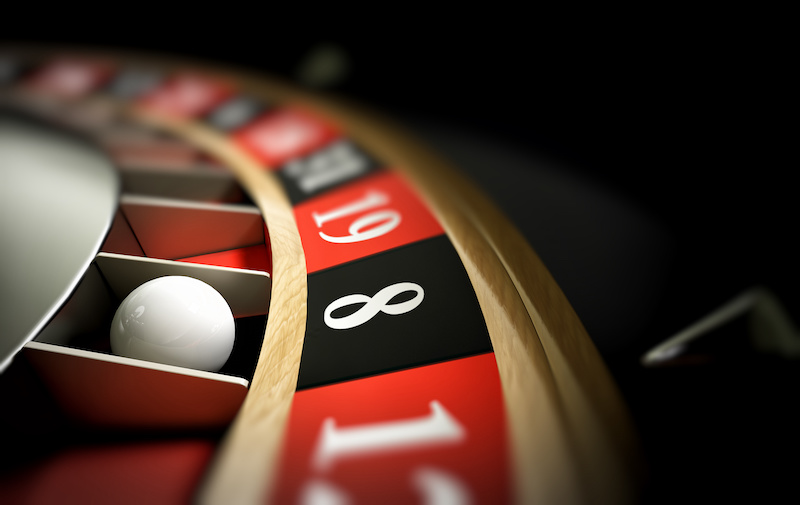
Roulette Computers and Legal Risks
Roulette computers measure ball speed during final rotations and predict landing zones. They're the most accurate roulette number prediction tool and the most dangerous to use.
A clear warning: Using a roulette computer is illegal in most jurisdictions. Getting caught means arrest, not just ejection. These devices cost between $500 and $10,000, and I wouldn't recommend purchasing one.
The computers work by analyzing the ball's deceleration rate and descent angle. Like other methods, they predict a sector rather than an exact pocket.
| Pros | Cons |
| Most accurate method | Illegal in most places |
| Based on measurable physics | Risk of criminal charges |
| Can overcome house edge | Expensive ($500-$10,000) |
Biased Roulette Wheels: A Strategy From the Past
Before computer-controlled manufacturing, roulette wheels had imperfections, and some numbers would hit more frequently than probability suggested. These were biased wheels, and hunting them was once a viable roulette strategy.
My wife and I played a biased roulette wheel at the Rio in Las Vegas in the early 1990s. Three adjacent numbers kept hitting throughout the day until the casino shut it down. Other players at the table never noticed, but we kept betting on those numbers and winning. It was an unbelievable thrill.
Today's reality? Modern wheels are manufactured and monitored with precision. Finding a biased wheel at a major casino is virtually impossible. Still, if you notice certain numbers appearing unusually often, betting them costs nothing extra.
| Pros | Cons |
| Historically proven | Nearly extinct in modern casinos |
| Simple to exploit once found | Requires hours of observation |
| No special skills needed | Casinos quickly replace flawed wheels |
Key Takeaways for Roulette Number Prediction
- No method guarantees wins – all predictive strategies target sectors, not exact numbers.
- European wheels are preferable – 2.70% edge vs 5.26% on American wheels.
- Bumpers exist specifically to thwart prediction – they randomize ball behavior.
- Legal methods carry no extra risk – you're playing a random game anyway if they don't work.
- Computers work but aren't worth the legal consequences.
Roulette Prediction Methods FAQ
Is roulette number prediction legal?
Mental strategies like dealer signature tracking and visual prediction are completely legal. Casinos can't police your thoughts. Roulette computers, however, are illegal in most jurisdictions.
Do dealer signatures still exist in modern casinos?
They're extremely rare. Modern wheels are engineered to eliminate predictable patterns, and shallow pockets prevent consistent ball behavior.
What is the most effective roulette prediction method?
Historically, biased wheel hunting produced the most reliable results. Today, no legal method consistently overcomes the house edge. Computer prediction is most accurate but carries serious legal risks.
Can you beat roulette long-term?
The mathematical edge always favors the casino. Predictive methods may produce short-term wins, but modern wheel technology has largely eliminated exploitable patterns.
