Everything in this article is absolutely true (meaning absolutely false) and the words come from the mouths of casino gamblers – adult casino players, not kids. However, the advice and opinions offered go from just bad to just horrendous and everything in between. 

Too many casino players just have totally wrong opinions, and yet on some of these opinions those players just can’t let them go. Indeed, all the more horror for them if they cling to such falsehoods because it costs them a lot more in losses than they need to experience. In general, casinos don’t have such real horrors in their thinking for casinos it is just money in and money in.

New Betting System?

Joey: I’ve been playing for five years once a month and let me tell you I have the best method for my play. It works most of the times. That it does. You can’t ask for anything more than that. It is called the Martyrdale (sic) and it is a very old way to overcome a game that has a house edge. I have taken away the house edge by playing this way folks. I’ll share with you for free.

After every loss, you double your previous bet. Just about every time you lose you will win an upcoming bet and make all your losses back. What could be simpler than this? I am surprised that other players don’t play this way. Maybe because I am new to casino playing and I have fresh eyes and also that other players just haven’t given the games much thought. There would be no casinos if everyone played as I do. So maybe I should be happy and stay quiet.

Frank responds: Joey, nope and nope again, you will lose a few times here and there and guess what? You will be blown away those few times and your losses will be gigantic as you try to recover the previous bets you lost.

The betting system, by the way, is called the Martingale and it is one of the most dangerous methods of playing casino games. Play it enough and you will take a brutal beating. The house edge is working there bright and brutal and it will bounce on you all over even though you think you have a winning method. You don’t.

Collecting Comps

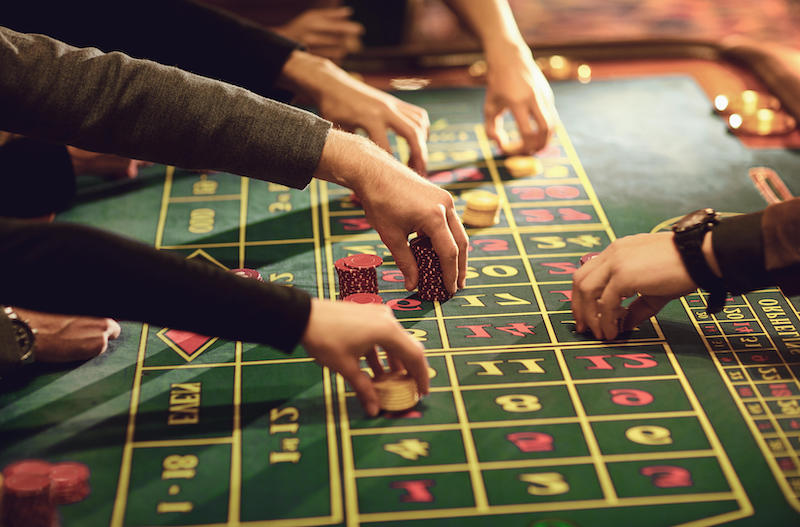
Nanny: Roulette is a great game and I am thinking of playing it. I look at the wheel and it has all those numbers, sure, but what if I bet all those numbers at once? I have to win on one number, right? Therefore, I will always break even on every spin of the wheel, right? Can you imagine the comps I’ll get because of that? I could probably live off them. What a life! The casinos will be paying for me to live like a billionaire.

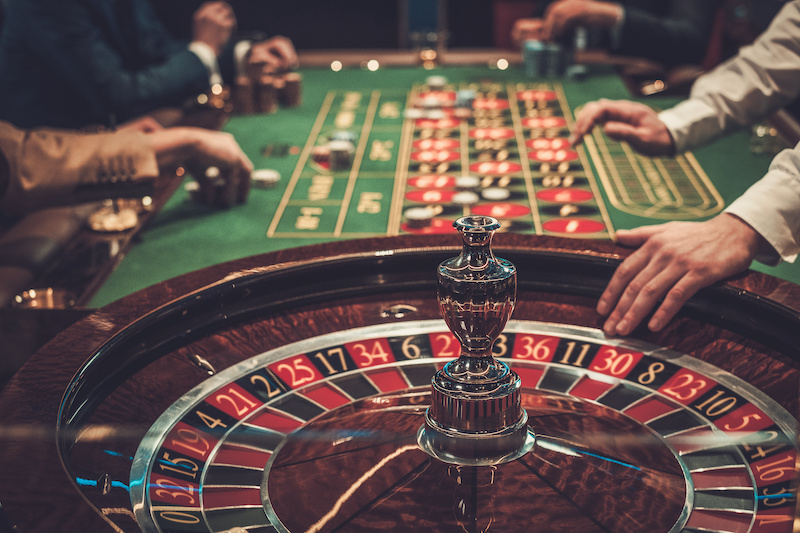
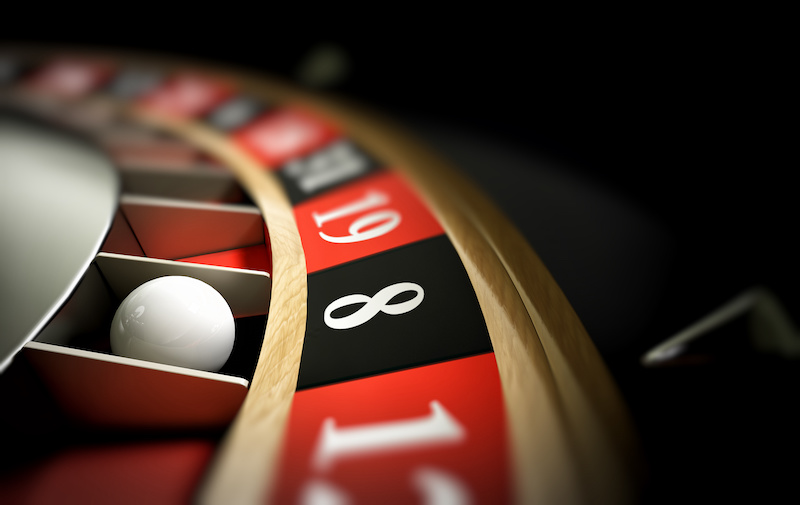
Frank responds: Nanny, I’m shaking you now to wake you up. There are three different roulette games out there right now and all of them pay a winning number 35-to-1. Sounds good, right? But one game has 38 numbers (1 through 36 and a 0 and 00) and is known as the American game; the other game has 37 numbers (1-36 plus a 0) and is known as the European/French game; and the third game, the newest and the worst of them all, has 39 numbers, 1-36 plus a 0, 00, and 000. No country has taken discredit for that game.

If you bet all the numbers you will win on every spin, yes, but that win will not cover the losses you have on every spin too. So, you will, pardon my wording, go down the nastiest longest losing streak drain in history and find yourself landing time and time again quite hard. 

Trying to figure out a way to out beat the casino is difficult, almost impossible. Take that truth to heart. Some very few (very, very few) methods have been developed to beat the house that work but those methods are hard to learn and execute in the casinos and the casino knows those methods and can usually spot a player attempting to use one. So, let caution be your buzzword. 

Just for your information: The American game has a house edge of 5.26%, meaning a loss of $5.26 per $100 wagered. The European/French game has a house edge of 2.7%, meaning a loss of $2.70 per $100 wagered. 

And that third game? The “untitled” game has a house edge of 7.69%. Yuck! Yuck! You can figure out what the house wins easily now…right? I have an easy way to do this figuring. Just dip into your purse or pocket and all that money will be theirs if you insist on playing this game the way you suggest. We roulette players have to hope the “Yuck, Yuck” game will fade out before we do.

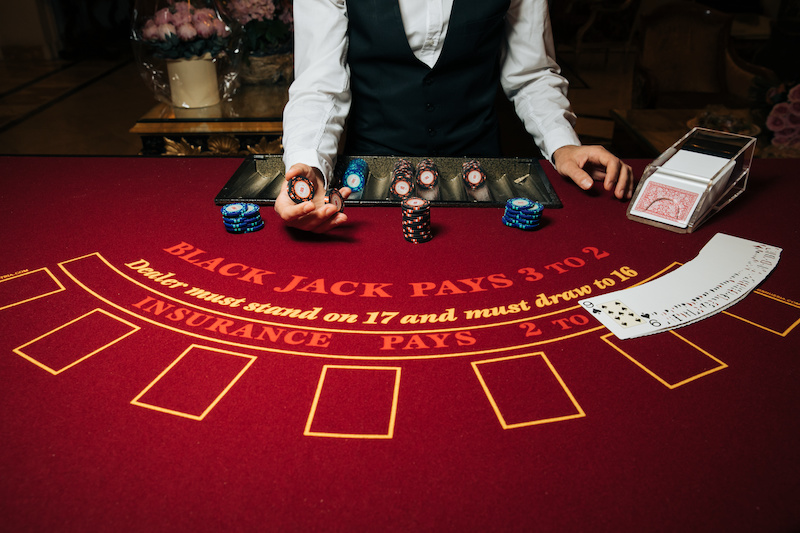
Blackjack Table

Baffled by Basic Strategy

George: I looked at the “what is called basic strategy” for blackjack and some of the moves do not make any sense at all. I’ve got to think that the casinos have put out this strategy to cost the players a lot of money if they bet this way.

Okay, look at the player hand of 12 going up against the 2 or 3 dealer up-card? What the heck, the basic strategy says to hit your 12, seriously? Oh, come on, really? How about that bad hand of a 16 versus a dealer 10 up-card? Take a hit? Oh, man, idiotic. 

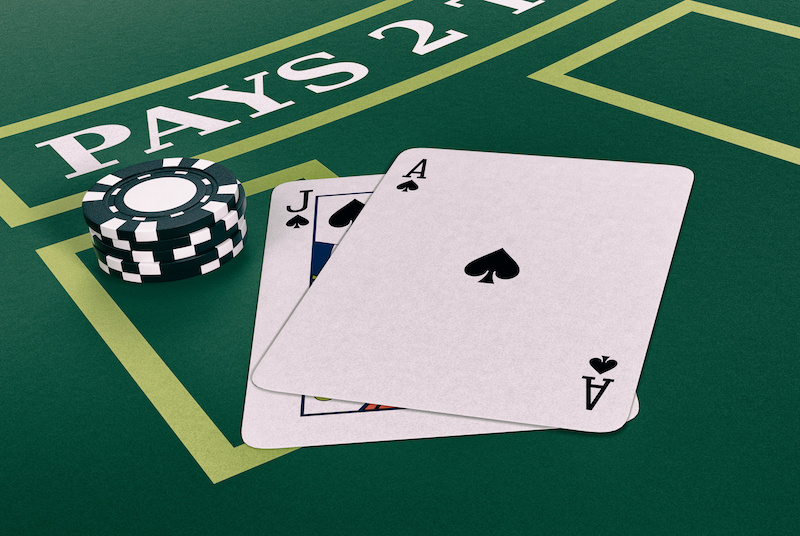
Now, you have a blackjack and the dealer is showing an ace. That dealer could also have a blackjack. But the idiot basic strategy says to just stay on your blackjack and not insure your hand which gives you an absolute win. What gives? You are giving up a guaranteed win by not insuring. Nuts!

There are many more examples but you get the picture. The basic strategy has been sold to us by the casinos. Every blackjack player should see that truth.

Frank responds: You are wrong George. In every way. The casinos did not invent “basic strategy,” they would prefer if the casinos players just played their own made-up (and wrong) strategies. 

Every hand you discussed; you will be playing incorrectly if you make the decisions you suggest. You will lose more and win less – simple as that. 

One on One and Done

Unless you can practice an advantage-play technique such as card counting at blackjack or dice control at craps or you own the luck-goddesses of the universe, you are ultimately doomed to lose to the casinos in your contests with them. 

It’s in the cards, and the ball, and the machine, and the dice. No way around that unless we win our first bet or session and quit forevermore. Then we are long-term winners even if our long term is just one bet or one session. 

I do not think any casino players think differently. Oh, perhaps some have the idea that without a stroke of massive luck, they will still beat one of the most successful industries on the planet based on their betting styles. These players are poor losing souls indeed.

Okay, forgetting buckets of magical luck washing over you and seemingly endless hours of learning hard-to-learn advantage-play techniques, what is the best way to play the games without getting hammered over any prolonged period of time? I think I can answer that question.

Saving money is a good thing when you play casino games. I think you can actually be just as thrilled when you know your play is somewhat thrifty. Being thrifty will not reduce your chances to win some money. And a chance to win is always the reason we feel that delightful sense of anticipation as we wait for the next decision.

Get ready for my secret ... here it comes – play only one bet at any game you enjoy playing. One bet at a time! Let’s look at some of the games and see how this idea works itself out.

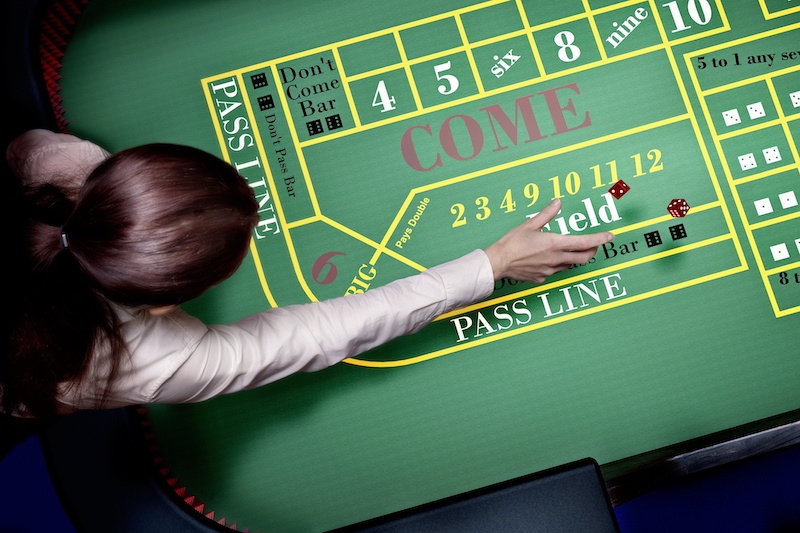
Craps table

Craps

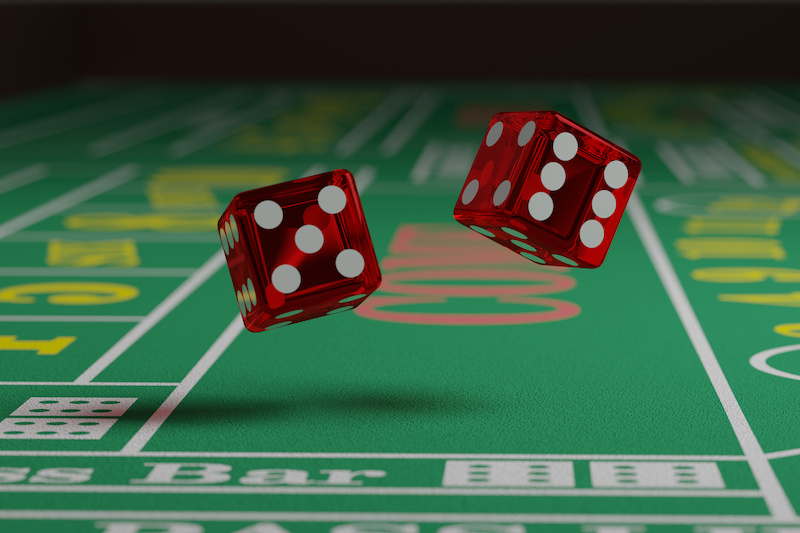
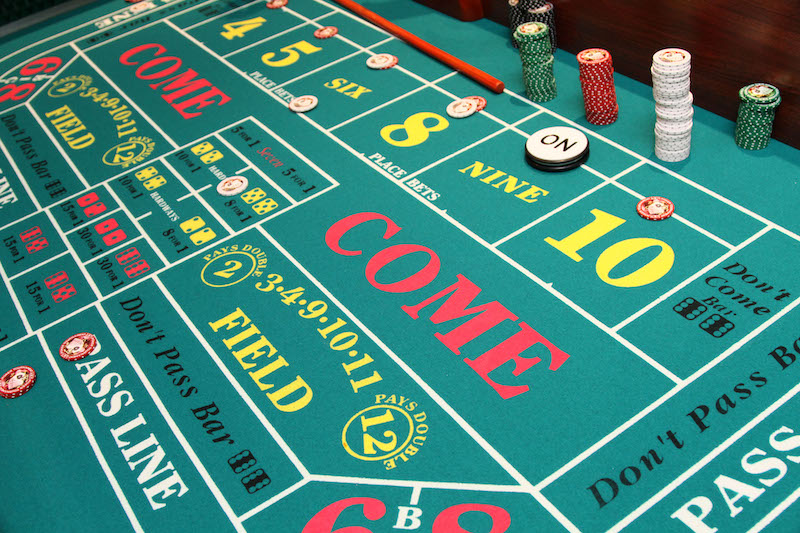
Craps is a game with multiple bets, most of them simply awful, with house edges way, way up there in double digits. What’s worse is that craps players delight in making multiple bets at the game, some good, many rotten with those rotten ones usually taking away any chance that the players will be ahead – even today or tonight. Many craps players need truly good or great shooters to bring home the money to them.

Stop betting multiple bets. Stick with the following bets – only one of them:

  1. Pass line or come bets taking the odds when these bets are up on a number. Make sure the odds bets are big and the line or come bets are small. The odds bet has no house edge attached to them. The formula is small line and come bets, highest odds you can afford or are allowed.
  2. Play at tables that are crowded. The more players, the slower the game. The slower the game, the better for the player. The game will seem fast but being at an empty or relatively empty table will make the game much faster against your bets.
  3. If you are a don’t player (a darksider) the advice is the same – one bet with the laying of odds. Full table or close to it. No place bets.
  4. Do not make any place bets except (maybe) the placing of the 6 or 8 on the rightside of the game. Just one of those numbers.
  5. I do believe in tipping the dealers but make your tips reasonable in relation to the size of your bets. Do not tip away your profits.

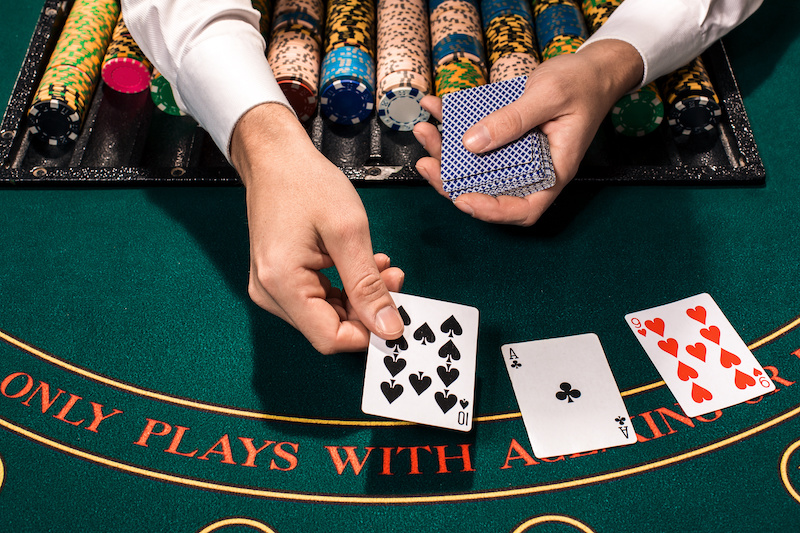
Blackjack

This the most popular table game and a cash cow for the casino against the players. Play one-on-one against the dealer and you are looking at over 100 decisions (or more) per hour. Yikes. Many blackjack hands come out to be more than one hand; doubling down, splitting pairs, with some of them really poor bets. 

Here are your rules of play:

  1. Play at full tables.
  2. Only play one hand; do not spread to two hands, unless the basic strategy calls for it.  
  3. Go to the bathroom during playtime, not during the shuffles. That bathroom time does not risk any of your money. Relieve yourself without worrying about the casino relieving you of your dough.
  4. Play perfect basic strategy and do not (do not) listen to the pundits who don’t think basic strategy is the proper way to play.
  5. Tip in relation to your bet sizes. Do not go overboard if you are having a hot night.

Roulette

The oldest game in the modern casino – brought to you by none other than Blaise Pascal, a brilliant philosopher and scientist of the 1600s. This is a game with many opportunities to make many different kinds of bets. You can make any one of these bets – but just one bet, no more. But I do have my recommendations here as well.

  • Do not play straight up by putting one bet on one number on the main layout. The chances of hitting that one number for a 35-to-1 payout will have you see many losing streaks, some of them very, very long losing streaks. 
  • There are three roulette games in today’s casinos, the single-zero game (0); the double-zero game (0, 00); and the triple-zero game (0, 00, 000). All the payouts for straight-up bets are 35-to-1 but the games get worse from one-zero to three zeroes. 
  • The house edge on the single-zero game is 2.7%, on the double-zero game is 5.26% and on the triple-zero game the house edge skyrockets to 7.69%.
  • I recommend that you only play the even-money bets of red/back, odd/even, or high/low. The payouts on these bets are one-to-one but you will not experience losing streaks that are monumental as they can be with straight up bets on the main layout. You will win 18 times and lose 19 times on single-zero; win 18 times lose 20 times on double-zero; and win 18 times and lose 21 times on triple-zero. 
  • Only make one bet; do not spread out as other roulette players will do. It is a bad strategy and wastes a lot of your (hard-earned) money.
  • Again, tip in relation to your session bankroll.

Do not play longer than you normally would even when situations look promising. This strategy is called one-on-one. Using it will not cost you as much money. Thrift is a good thing.

June 5, 2024

By Frank Scoblete

Frank Scoblete
Body

Frank Scoblete grew up in Bay Ridge, Brooklyn. He spent the ‘60s getting an education; the ‘70s in editing, writing and publishing; the ‘80s in theatre, and the ‘90s and the 2000s in casino gambling.

Along the way he taught English for 33 years. He has authored 35 books; his most recent publisher is Triumph Books, a division of Random House. He lives in Long Island. Frank wrote the Roulette strategy guide and he's a well known casino specialist. 

Frank Scoblete
factcheck
Off
hidemainimage
show
Hide sidebar
show
Fullwidth Page
Off

Video poker players who play the game regularly – or even not so regularly – tend to have a favorite game or few games. They tend to play these games exclusively. They play the same pay tables for these select games. 

The reason for this is these players have learned and practiced the proper playing strategy for the specific game (or games) and pay tables that they play. They do this to maximize the return from their video poker play. 

But what happens if they cannot find one of their games and pay tables, but there is a similar – but different – game/pay table available. 

Many of the more seasoned players with easy access to several live casinos will simply not play if they cannot find their game/pay table.

Some video poker players who also have favorite games and have practiced the proper strategy for those games. However, they have limited access to casinos and are willing to sacrifice some return to enjoy playing the game.

While this article is focused on these latter players, it may also be of interest to the former. Is playing a close, but wrong, video poker strategy that big a deal? How much does it actually cost a player? Read on to find out more.

Contents

  1. The games and strategies that are examined
  2. Not exactly the same strategy in some cases
  3. Returns from Jacks or Better based games
  4. Returns from Deuces Wild based games
  5. Pay table (only) differences
  6. Summary

1 – The games and strategies that are examined

This article will only examine only a few of the most popular video poker games and their strategies. They are:

  • Full-pay (9/6) Jacks or Better
  • Full-pay (8/5) Bonus Poker
  • Full-pay (10/7) Double Bonus Poker
  • 9/6 Double-Double Bonus Poker
  • Full-pay (15/9/5/3/2/2/1) Deuces Wild
  • Not So Ugly Ducks (NSUD) (16,10,4,4,3,2,1) Deuces Wild

2 – Not exactly the same strategy in some cases

While, theoretically, this article is about playing a different strategy, there is at least one situation where some basic common sense should override the strict strategy. That common sense change involves playing a Double-Double Bonus game using any of the other Jacks or Better based strategies mentioned in the article – specifically: Jacks or Better, Bonus Poker, and Double Bonus Poker.

When dealt four aces through 4s, the player would keep an ace through 4 kicker. Normally in the game the strategy is developed for, there is no reason to keep a kicker, but it is worth a bundle when playing Double-Double Bonus.

3 – Returns from Jacks or Better based games

The table below shows the game played in the left column with the returns from the different game tips in the columns to the right.

Game

Return

9/6 Jacks

8/5 Bonus

10/7 DBP

9/6 DDB


%

Retn 

Diff

Retn

Diff

Retn

Diff

Retn

Diff

9/6 JoB

99.54

99.54

0.00

99.54

0.00

98.94

-0.60

98.51

-1.03

8/5 BP

99.17

99.17

0.00

99.17

0.00

98.20

-0.97

98.37

-0.80

10/7 DB

100.17

100.17

0.00

99.61

-0.56

100.17

0.00

99.86

-0.31

9/7/5 DB

99.11

99.11

0.00

98.46

-0.65

99.05

-0.06

98.77

-0.34

9/6 DDB

98.98

98.98

0.00

98.61

-0.37

98.45

-0.53

98.98

0.00

In some cases, the difference is surprisingly small. The differences range from zero to a 1.03% reduction in the return. 

Let us put these numbers into perspective. Assume the game denomination is a quarter. Each bet would then be $1.25. Also assume a play speed of 500 hands per hour. Your speed could be less or it could be more, but 500 is a nice moderate pace for examples. 

At this rate, $625 would be played through the game every hour. The smallest reduction in return is 0.06%. That works out to 37.5 cents per hour. Certainly, that will not matter very much. But let’s look at some other reductions to see how they impact the bankroll.

  • 0.31% amounts to $1.94 per hour.
  • 0.34% amounts to $2.13 per hour.
  • 0.37% is $2.31 per hour.
  • 0.53% is $3.31 per hour.
  • 0.56% is $3.50.
  • 0.65% is $4.06.
  • 0.80% is $5.00.
  • And, finally, 1.03% is $6.43 per hour.

Some of the reductions in return have a big impact. If the thought of using a strategy familiar to you seems tempting, please remember these numbers before taking the plunge.

4 – Returns from Deuces Wild based games

The following table shows the game played in the left column with the returns from the different strategies in the columns to the right.

Game

Return

Full Pay DW

NSUD


%

Retn 

Diff

Retn

Diff

FP DW

100.76

100.76

0.00

99.73

-1.03

NSUD

99.73

98.80

-0.93

99.73

0.00

There is no good news in the Deuces Wild variety. Playing the wrong strategy costs, and costs big. This is something you should really think about before trying. It is much better to take the time to learn the proper strategy than to commit to more than five dollar per hour reduction in return.

Double Bonus video poker

5 – Pay table (only) differences

What happens if the strategy being played is for the correct game, but the pay table is different? How does that affect the return?

Following are a few examples of the cost of playing the strategy for the same game but a different pay table.

Jacks or Better

  • Strategy used: Full-pay (9/6) Jacks or Better – 99.54 percent return

Game Played

Optimal Return

Modified Return

Difference

JoB 8/5

97.20%

97.29%

-0.01%

JoB 6/5

95.00%

94.99%

-0.01%

  • Strategy used: 8/5 Bonus Poker – 99.17 percent return

Game Played

Optimal Return

Modified Return

Difference

BP 7/5

98.01%

98.01%

-0.00%

JoB 6/5

95.00%

94.99%

-0.01%

  • Strategy used: 10/7 Double Bonus Poker – 100.17 percent return

Game Played

Optimal Return

Modified Return

Difference

DBP 9/6

97.81%

97.56%

-0.25%

DBP 8/5/4

94.19%

93.44%

-0.75%

  • Strategy used: 9/6 Double-Double Bonus – 98.98 percent return

Game Played

Optimal Return

Modified Return

Difference

DDB 10/6

100.07%

100.07%

-0.00%

DDB 6/5

94.66%

94.59%

-0.07%

  • Strategy used: Full-pay (15/9/5/3/2/2/1) Deuces Wild – 99.54 percent return

Game Played

Optimal Return

Modified Return

Difference

DW NSUD**

99.73%

98.78%

-0.95%

In most cases, there is not much difference in returns between playing the proper pay table strategy and playing the strategy for most common pay table. The glaring differences are for Double-Double Bonus and Deuces Wild. 

6 – Summary 

  • It is very difficult to master strategies for all video poker games and pay tables.
  • Using a known strategy for a similar game can be an option for some players.
  • Some strategies are not a good match for certain other games.
  • The impact on return for strategies for different pay tables of the same game is not as great as different game strategies.
  • Care should be taken to understand the impact of using a different strategy before committing to using it.
  • Players should decide for themselves what strategy to play – or whether to play an inferior game at all.
June 4, 2024

By Jerry Stich

Jerry "Stickman" Stich
Body

Jerry “Stickman” has been involved in casino gambling for nearly 30 years. He is an expert in blackjack, craps, video poker and advantage slot machine play. He started playing blackjack in the late ‘80s, learned several card counting systems and used these skills to become an advantage blackjack player and overall winner of this game. He also acquired the skills necessary to become an overall winner in the game of craps, accomplishing this by a combination of throwing skill and proper betting techniques. Stich is also an overall winner playing video poker. This was accomplished by playing only the best games and using expert playing strategy. 

Jerry used his skills to help others also become better gamblers. He has taught advantage play techniques in blackjack, craps, video poker and slot play to hundreds of students. He is a regular contributor to top gaming magazines and has authored and co-authored various books on gambling.

Jerry Stich
factcheck
Off
hidemainimage
show
Hide sidebar
show
Fullwidth Page
Off

It’s easy to stay at one of the new, shimmering casinos on the Las Vegas Strip or thereabouts. And we’re advocates for doing just that. 

The Fontainebleau, for example, is new, cushy and compelling. Opened late last year, it features a state-of-the-art spa, fabulous restaurants (La Fontaine is a terrific Frenchified spot for gourmet dining) and a nightclub that will have you dancing all night. 

But, also, there is something to be said for checking into the town’s oldest joints. They tend to be comfortable, friendly, dripping with history and best bets for value hunters. Knowing where Las Vegas used to be can provide a great counterbalance to explorations of where the ever-changing city is heading next. 

Here then are four of our favorite casino/hotels that drip history and provide great experiences. 

GOLDEN GATE

Not only is this the oldest continually running gambling den in Las Vegas, but it is also a great bargain with recently renovated rooms usually going for less than $100 per night, even on the weekends. Opened in 1906, the Golden Gate was lauded for its electric lighting and steam heat. 

The city’s first phone number was installed at the Golden Gate, though gambling was temporarily put on ice – between 1910 and 1931, when the likes of poker and roulette were outlawed in the burgeoning Sin City. 

These days of course, the place, fittingly situated at 1 Fremont Street, is loaded with all the gambling you can desire. Upon checking in, don’t forget to get a gander at the display case, which features mementos from the early days.

EL CORTEZ

This is my favorite place to gamble. I love the clutch of blackjack tables located in the rear of the casino, with low limits, friendly dealers and a good-natured pit crew. 

Best of all: The single deck games that pay 3 to 2 on blackjacks (these days, the much less advantageous 6 to 5 seems to be everywhere outside of the high limit rooms). 

Located downtown, right on Fremont Street, the El Cortez was built in 1941 and billed as downtown LV’s first full-on resort. In 1945, the joint was purchased by a group of mobsters who included Bugsy Siegel and Meyer Lansky. Tribute is now paid to Bugsy via the Cortez restaurant, Siegel’s 1941, where the prime rib special is a must-order item.

Beyond the food, the Parlor Bar puts on performances of bands playing vintage jazz that takes you back to another era. Back it up with a quick jaunt through the Cortez’s History Hallway, where black-and-white photos capture the early days of Vegas in general and the El Cortez in particular.

If you want to soak up history with comfort and style, be sure to reserve one of the hotel’s 47 original rooms. They received top to bottom renovations in 2022. No doubt, Bugsy Siegel would approve.

GOLDEN NUGGET

The Nugget, as it’s known, reigns one of the fancier places downtown and it was built to be that way, constructed at a cost of $1 million in 1946. The joint’s founder, Guy McAffee, was perfect for Vegas. He came there from nearby Los Angeles with a posse of mobster pals and a history of running illegal nightclubs after his stint as a crooked cop.

Reportedly, McAffee invited 20,000 people to the grand opening and hosted some of the highest poker games in town. Over time, though, the Golden Nugget was eventually eclipsed by places on the Vegas Strip. If it did not exactly go to seed, well, it was on the way.

In 1972, Steve Wynn came to the rescue. Taking a controlling interest, he restored the Golden Nugget back to its original luster. The place changed hands multiple times after Wynn sold it to MGM and MGM sold it to a fresh set of owners. Wynn, if nothing else, was a masterful showman, and the place retains no small amount of head-turning amenities.

Tourists come to check out the Tank Pool – loaded with sharks – and guests enjoy the $30 million swimming pool, complete with a slides that whip you through the shark tank. Thanks to Plexiglass encasement, a drop into the pool is a gamble in which you can’t lose. Goldennugget.com

THE FLAMINGO

While Guy McAffee was getting the Golden Nugget in motion, his organized crime pal Bugsy Siegel was breaking ground on a main thoroughfare that came to be known as the Las Vegas Strip. 

That’s where the Fabulous Flamingo stood. Opened in 1946, it was the third casino to be built on the Strip (first up on what would pretty much define Vegas was the El Rancho) and stood out as the costliest spot in town, constructed with a $6 million budget. 

The idea was right – put up luxurious digs (including Seigel’s penthouse, which took up the entire fourth floor), bring in top-flight entertainment (the likes of Jimmy Durante and later Wayne Newton), lure rich gamblers from around the world – but the execution must have been flawed. The Flamingo flopped in record time. By 1947, other mobsters had it under their control and Seigel took a bullet to the head in June of that year.

Flamingo Casino Las Vega

What marked the end of Seigel also seemed to mark the beginning of the Flamingo and high-end Vegas as we now know it. The property turned over $4 million in profit during 1948 and Vegas proved to be fertile ground for organized crime.

While the Flamingo has switched ownership a number of times – one of the bosses, in 1953, added the Champagne Tower, which was fronted with bubbling neon – it is now in the hands of Caesars Entertainment and rules as the oldest, still-operating casino on the Strip. 

The tropical themed pool remains in full effect and the spirit of Hunter S. Thompson, who stayed there while reporting “Fear and Loathing in Las Vegas,” still haunts some of the rooms. Speaking of which, the Fab Rooms are the oldest and most loaded with history (a plus or minus, depending on how you see things) and high-floor Flamingo rooms are the pinkest and newest and offer views of the flamingo loaded Habitat. 

Where would I stay? Like a blackjack player dealt a pair of Aces, I’d split ‘em, and spend half of my time in each room.

June 3, 2024

By Michael Kaplan

Michael Kaplan
  • ">
  • Body

    Michael Kaplan is a journalist based in New York City. He has written extensively on gambling for publications such as Wired, Playboy, Cigar Aficionado, New York Post and New York Times. He is the author of four books including Aces and Kings: Inside Stories and Million-Dollar Strategies from Poker’s Greatest Players.

    He’s been known to do a bit of gambling when the timing seems right.

    Michael Kaplan
    factcheck
    Off
    hidemainimage
    show
    Hide sidebar
    show
    Fullwidth Page
    Off

    Progressive video poker offers benefits and challenges for players. One of the major challenges is determining the return at a specific level of the jackpot. This articles explores that aspects of the game.

    Contents

    1. Overview of progressive video poker
    2. Returns of sample progressive games
    3. Analysis of tables
    4. Cautions
    5. Summary

    1 – Overview of progressive video poker

    In a progressive game, one or more lines of the pay table increases as the game is played. The most common pay line is the royal flush. 

    At reset value, the royal flush pays the same as a non-progressive – 4,000-for-5. As the game (or linked bank of games in a casino) is played, part of the amount bet goes towards increasing the amount paid when the jackpot is hit. Once a royal flush (or other progressive jackpot hand) is hit, the amount paid is returned to the reset value.

    To finance the increasing progressive jackpot line(s), one or more other pay lines are reduced. Usually, the full house and flush pays are decreased by one each. This amounts to an overall decrease in return at reset value of about 2.5 percent.

    The major benefit of progressive games is returns can become very high. While uncommon, the jackpot for a royal flush – normally set at 4,000-for-5 – has been known to get to more than triple that or 12,000-for-5. 

    One of the major challenges, however, is knowing the actual return of the game. Most serious players avoid progressives if the return is under 100%. But how can one know the jackpot required for a 100 percent return? 

    2 – Returns of sample progressive games

    This section list a few of the more popular progressive video poker casino games and shows the average returns at various progressive jackpot levels. 

    Explanation of table information:

    • Each table starts at the reset value of 4,000 and increases by 1,000 until the 100% return mark (which is included as a separate line). From there, jackpot values are increased by 500 until 12,000 is reached. This is three times the reset value.
    • The base return is a typical return, but the pay tables of progressives vary significantly between and even within casinos. 
    • The Royal Flush (RF) jackpot is in credits paid for five credits bet. 
    • Return percent is the average return at the listed RF Jackpot.
    • Change is the change (increase) in the return from the previous level (except for the 100% return level – yellow).
    • The variance is listed for the reset value, the 100% level and three times the reset value.

    Progressive Video Poker Returns for 8/5 Jacks or Better

    RF JackpotReturn %ChangeVariance
    4,00097.30 19.32
    5,00097.800.50% 
    6,00098.380.58% 
    7,00098.980.60% 
    8,00099.590.61% 
    8,700100.02 96.27
    9,500100.510.31% 
    10,000100.820.31% 
    10,500101.130.31% 
    11,000101.450.32% 
    11,500101.780.31% 
    12,000102.070.31%184.34

    Progressive Video Poker Returns for 7/5 Bonus Poker

    RF JackpotReturn %ChangeVariance
    4,00098.01 20.75
    5,00098.530.52% 
    6,00099.090.56% 
    7,00099.680.59% 
    7,550100.02 74.09
    8,000100.290.61% 
    8,500100.600.31% 
    9,000100.900.30% 
    9,500101.210.31% 
    10,000101.520.31% 
    10,500101.840.32% 
    11,000102.150.31% 
    11,500102.460.31% 
    12,000102.780.32%186.19

    Progressive Video Poker Returns for 9/6 Double Bonus Poker

    RF JackpotReturn %ChangeVariance
    4,00097.81 30.78
    5,00098.340.53% 
    6,00098.900.56% 
    7,00099.490.59% 
    7,850100.00 89.73
    8,500100.400.31% 
    9,000100.700.30% 
    9,500101.010.31% 
    10,000101.320.31% 
    10,500101.620.30% 
    11,000101.930.31% 
    11,500102.250.32% 
    12,000102.560.31%194.95
     

    Progressive Video Poker Returns for 8/6 Dbl-Dbl Bonus Poker

    RF JackpotReturn %ChangeVariance
    4,00097.89 41.85
    5,00098.430.54% 
    6,00099.010.58% 
    7,00099.590.58% 
    7,700100.01 98.30
    8,000100.190.60% 
    8,500100.500.31% 
    9,000100.810.31% 
    9,500101.130.32% 
    10,000101.440.31% 
    10,500101.750.31% 
    11,000102.070.32% 
    11,500102.380.31% 
    12,000102.700.32%207.91

    Progressive Video Poker Returns-Deuces Wild 25/15/11/4/3/3/2/1

    RF JackpotReturn %ChangeVariance
    4,00097.39 25.36
    5,00097.860.47% 
    6,00098.360.50% 
    7,00098.870.51% 
    8,00099.400.53% 
    9,00099.930.53% 
    9,150100.01 99.19
    9,500100.190.26% 
    10,000100.460.27% 
    10,500100.720.26% 
    11,000100.990.27% 
    11,500101.250.26% 
    12,000101.520.27%163.43

    3 – Analysis of tables

    There are several similarities in all the tables.

    In all non-wild card games:

    The 100% return point is reached between 7,500 and 8,700 credits. The difference is caused by the reset value return. The lower returns have a higher 100% level than the higher reset value returns.

    There is a roughly 0.3% increase in return for each 500-credit increase in royal flush jackpot

    In the Deuces Wild game:

    The 100% return level is reached at just over 9,000 credits in the royal flush jackpot.

    In the Deuces Wild game, the increase is approximately 0.26% for each 500-credit increase in the royal flush jackpot.

    To determine the approximate point where the game returns 100% return, the return of the reset-value game must be known. This information is available online for most games and pay tables. 

    Once you have that, simply subtract the reset-value return percentage from 100 and divide that by 0.60 (the percent increase per 1,000-credit increase in the jackpot). This is the approximate thousands to add to 4,000 to get the 100% return jackpot value.

    • Ex: for the 8/5 Jacks or Better game, the reset-value return is 97.30. 100 – 97.30 = 2.70. Divide this by 0.60 = 4.5. 4,000 + 4,500 = 8,500. This is approximate – but close.

    From that point, (or from any point where the return is known) each increase of 500 raises the return by approximately 0.3 percent.

    4 – Cautions

    Playing a progressive game is different from playing a standard game. Please go here for more detailed information: Best Video Poker Games to Play | Ultimate Guide to Video Poker.

    The major points in that link are:

    • The variance increases as the royal flush jackpot increases. This means bankroll requirement are higher.
    • Many others will be playing for the same high jackpot. If there are five or seven or nine other players going after the same target, chances are against you being the victor.
    • The return percentages are based on optimal play, meaning the playing strategy changes as the royal flush jackpot increases. Changing strategy on the fly is difficult to do accurately.

    One final caution, when you see a seemingly high royal flush jackpot, make sure the total credits required to get that jackpot is five. I have seen many progressive games with great looking jackpots that require 10 credits to trigger the royal flush jackpot. 

    Observation is a key to successful video poker play.

    5 – Summary 

    • The 100% return point of a progressive game can be estimated.
    • The total return of a progressive game can also be estimated.
    • There are other things beside the return to consider when playing a progressive game with a high jackpot value: other players, variance, bankroll requirements, and strategy changes are a few. 
    May 30, 2024

    By Jerry Stich

    Jerry "Stickman" Stich
    Body

    Jerry “Stickman” has been involved in casino gambling for nearly 30 years. He is an expert in blackjack, craps, video poker and advantage slot machine play. He started playing blackjack in the late ‘80s, learned several card counting systems and used these skills to become an advantage blackjack player and overall winner of this game. He also acquired the skills necessary to become an overall winner in the game of craps, accomplishing this by a combination of throwing skill and proper betting techniques. Stich is also an overall winner playing video poker. This was accomplished by playing only the best games and using expert playing strategy. 

    Jerry used his skills to help others also become better gamblers. He has taught advantage play techniques in blackjack, craps, video poker and slot play to hundreds of students. He is a regular contributor to top gaming magazines and has authored and co-authored various books on gambling.

    Jerry Stich
    factcheck
    Off
    hidemainimage
    show
    Hide sidebar
    show
    Fullwidth Page
    Off

    Giving players the games they want is part of the business for casino operators, and plenty of players have made clear they want craps. Through the 1940s and '50s it was the most popular casino table game in the United States before it was overtaken by blackjack in the 1960s.

    But some jurisdictions don't permit dice games, with California being the leading example. What's an operator to do?

    In California and some Native American casinos in other states, one solution has been Card Craps, in which playing cards take the place of dice. The craps substitute is  uncommon in online casinos, where images of dice, or occasionally, streaming video of live hands are used.

    The Cards

    Translating craps to a card format takes some adjustment. A dealer turns up one two-card hand instead of a shooter rolling two dice. To mimic six-sided dice, only six card denominations are used: Aces, 2s, 3s, 4s, 5s and 6s.

    Card Craps can be dealt with as few as two such six-card decks. To do so, each deck is shuffled separately. Usually different colored card backs are used so the dealer knows which cards go together.

    With that method, there is a 1 in 6 chance of any number being dealt from each deck. That parallels the 1 in 6 chance of any number coming up on each die in traditional craps. 

    That makes the two-card odds the same as two-dice odds. Available bets and payoffs can be the same with cards as with dice.

    Multiple Decks

    Some casinos use more cards, with multiple decks shuffled together, One common method is to use 24-card decks, with each denomination in clubs, hearts, spades, and diamonds.

    To best approximate the odds of traditional craps, multiple decks must be used. That's because of the effect of removal from play for each card dealt.

    With dice, if the first die lands on a 4, the chance of the second die then landing on a 4 is 1 in 6. If cards are used instead and only a 24-card single deck is in play, if the first card is a 4, there are only three fours the remaining 23 cards. That makes the chance of drawing a second 4 only 1 in 7.67, meaning a hard 8 consisting of 4-4 would occur less often in Card Craps than traditional craps.

    In order to adjust, many decks are used. If six decks are used, there are a total of 264 cards, with 44 of each denomination. Then, if a 4 is dealt on the first card, the chance of a 4 on the second is 43 in 263, or 1 in 6.12, much closer to the 1 in 6 odds with a second die.

    Casinos can vary how many decks they use, but six decks and 264 cards yields a good approximation of the dice game, with some small differences in odds and payoffs.

    Layout & Gameplay

    As in regular craps, a table felt is marked off with available wagers, including pass, don't pass, come, don't come, point numbers for place bets, the field, hardways, and one-hand propositions such as any craps or any seven.

    Players can make pass, don't pass, come or don't come wagers by putting their chips in the designated areas. They also can back pass bets with free odds and lay odds on don't pass bets by putting their chips behind those wagers.

    For odds on come and don't come and for all other bets, players must put their chips on the layout and tell the dealer what bets they want to make.

    Craps Table

    The Wagers

    Single-hand bets – the Card Craps equivalent of one-roll propositions with dice –  are simple no matter what the format. If you bet any 7, you win on if the two cards or two dice total 7 and lose on any other total. If you bet on any craps, you win if the two cards total 2, 3 or 12 and lose on anything else.

    You pay a high price for single-hand bets being easy to track. House edges are higher than on more complicated wagers that take multiple hands to decide.

    In Card Craps games that use two six-card decks shuffled separately,  the house edge is 13.89 percent o 2 or 12, with a 30-1 payoff on winners; 11.11 percent on 3 or 11, with 15-1 pay; 11.11 percent on any craps, where you win on 2, 3 or 12 and which pays 15-1, and a whopping 16.67 percent on any 7, which pays 4-1.

    The one-hand wager with the lowest house edge is the field. You win even money if the hand is 3, 4, 9, 10 or 11. You also win on 2 or 12. Minimum payout is 2-1, and many casinos raise that to 3-1 on one of those numbers. The house edge is 5.56 percent if 2 and 12 both pay 2-1, or a more playable 2.78 percent if one of them pays 3-1.

    But the lowest house edges come on wagers that take multiple hands to decide. Let's look at how some of the most frequent wagers work. For a complete look at how craps bets and odds work with dice or the separate decks method at Card Craps, see 888's "Ultimate Craps Strategy Guide."

    Pass

    Make a bet before a sequence starts with a comeout. If the dealer turns up a two-card total of  7 or 11 on the comeout, you win, but if the hand is 2, 3 or 12 you lose. If the comeout is any other number, it becomes the point. 

    Once a point is established, you win only when the dealer repeats that total with a subsequent hand before turning up a 7. If a 7 comes first, you lose. No other totals matter. If the point is 9 and the following hands are 11, 8, 2, 5 and so on, your bet stays in action until you either win with a 9 or lose with a 7. The payoff on all winners is even money.

    Come

    This works the same way as pass, except the betting sequence starts on any hand, not just on the comeout. The hand after you make the bet becomes the equivalent of the comeout for the come bet, and from there action proceeds just as on the pass bet. The payoff on all winners is even money.

    Don't pass

    This is nearly the opposite of pass, except on the comeout, you don't win on 12. Instead, 12 pushes and you get your money back. Otherwise, it's the flip side of pass. On the comeout, you win on 2 or 3 and lose on 7 or 11. Once a point is established, you win if a 7 turns up first and lose if the point  number is repeated. The payoff on all winners is even money.

    Don't come

    The near opposite of come, this is the same as don't pass except you can make it on any hand, not just on the hand that would be a comeout for pass or don't pass. The payoff on all winners is 2-1.

    Free odds

    You can back pass or come bets with free odds after a point is established. On winners, the odds bet is paid at true odds, so 6s and 8s pay 6-5, 5s and 9s pay 3-2 and 4s and 10s pay 2-1.

     In California, some casinos allow up to 5x odds meaning you can make an odds bet up to five times your pass or come bet. Keeping your pass or come bet low and saving the larger share of your bet for free odds lowers the overall house edge.

    Lay odds

    You can back don't pass or don't come bets by laying odds after a point is established. You must spot the house the true odds, so you payoffs are 5-6 on 6 or 8, 2-3 on 5 or 9 and 1-2 on 4 or 10. There is no house edge when laying odds.

    The plus in laying odds comes when you keep your don't pass or don't come bet low to save money for the odds. Then, you bet the least on the comeout when you have only three ways to win (one way to make 2, two ways to make 3) and eight ways to lose (six ways to make 7, two ways to make 11). Your bigger bets come after there's a point, when don't players win more often than they lose.

    Place bets

    You can bet on 4, 5, 6, 8, 9 or 10. If your number is dealt before a  7, you win. If a 7 comes first, you lose. Payoffs are 7-6 on 6 or 8, 7-5 on 5 or 9, or 9-5 on 4 or 10.

    Difference When Decks Are Shuffled Together

    As noted earlier, the effect of card removal alters the odds when all cards are shuffled together instead of dealt from separate decks. At wizardofodds.com, Michael Shackelford calculates that in a Card Craps game with 264 cards shuffled together, the house edge on pass bets is 1.36 percent instead of the 1.41 using two dice or two separately shuffled six-card decks. The edge on don't pass is 1.37 percent instead of 1.36 percent.

    Here's a list of major multi-hand (or multi-roll) wagers with their payoffs, house edge with 264 cards and house edge with either two dice or two separate six-card decks.


    WagerPayoffHouse edge, 264 cardsHouse edge, 2 dice or 2 separate 6-card decks
    Pass or come1-11.36%1.41%
    Don't pass or don't come1-11.37%1.36%
    Odds, 4 or 102-10.51%0
    Odds, 5 or 93-200
    Odds, 6 or 86-50.25%0
    Lay odds, 4 or 101-2-0.25%0
    Lay odds, 5 or 92-300
    Lay odds, 6 or 85-6-0.21%0
    Place 4 or 109-57.14%6.67%
    Place 5 or 97-54%4%
    Place 6 or 87-61.76%1.52%

    Note that you get a slightly better deal on pass or come with 264 cards shuffled together than with two dice or two six-card decks, but the house edge is a big higher on don't pass, don't come and place bets on 4 or 10 and 6 or 8.

    In standard craps, free odds have no house edge, but there the house does have an advantage on 4 or 10 or 6  or 8 in the 264-card method. There's a tradeoff on lay odds. The minus sign on 4 or 10 and 6 or 8 signifies a house disadvantage. The player has an edge in laying odds on those numbers, though you still must face the house edge on don't pass or don't come to get that deal.

    Conclusion

    Card Craps can't give you the same hands-on feeling of rolling the dice yourself, but it does closely mimic the odds and gameplay of the real thing. In jurisdictions where dice games aren't licensed, it's a worthy take on a player favorite.

    Check out additional craps tip from 888casino to learn more about the game.
     

    May 17, 2024

    By John Grochowski

    John Grochowski
  • ">
  • Body

    For nearly 25 years, John Grochowski has been one of the most prolific gaming writers in the United States. He’s been ranked ninth by GamblingSites among the top 11 gambling experts at Gambling Sites and his Video Poker Answer Book was ranked eighth among the best gambling books of all time.

    He started a weekly casinos column in the Chicago Sun-Times at the beginning of 1994 and He soon found himself in demand by a wide range of publications. He has written for casino industry professionals in Casino Executive and Casino Journal magazines, and for players in Casino Player, Strictly Slots and many other magazines.

    John’s twice-weekly columns appear in Casino City Times, Atlantic City Weekly and several websites. He has written six books on casino games, including the “Casino Answer Book” series. And, of course, John is a regular at 888casino Blog.

    Today John’s work includes a weekly column on baseball metrics for the Sun-Times. He lives in the Chicago area with Marcy, his wife of 30 years.

    John Grochowski
    factcheck
    Off
    hidemainimage
    show
    Hide sidebar
    show
    Fullwidth Page
    Off

    Player choices make a difference in blackjack, regardless of whether you're playing online blackjack or in a live casino. That's one of the keys to the game's long-standing popularity.

    The most obvious choices that make a difference come in blackjack strategy. Do you hit or stand. Should you double down? Should you split a pair? 

    Basic strategy can be your guide to those options, but there are choices beyond playing strategy that make a difference in your chances to win or lose.

     Is it better to play at a crowded table or an empty one? Are fewer decks always better for players? Those are among the choices players face in addition to blackjack strategy once the game is underway.

    Let's explore some of the decisions blackjack players must make.

    Is It Better to Play at a Crowded Table or an Empty One?

    Some players love the social experience of playing at the same table as others. Some like to go solo and neither interact with anyone but the dealer nor fret over whether bad decisions by others will affect their hands.

    Never mind that bad plays by others help you just as often as they hurt you and are best ignored. The times they hurt gall some players enough they'd rather avoid the issue.

    But an important factor is speed of play. When there are fewer players at the table, the game moves faster. It takes less time to deal the cards, play the hands and settle the bets.

    Jim Kilby, in his highly regarded text "Casino Operations Management," listed average hands per hour at 52 at a full seven-player blackjack table, 60 with six players, 70 with five, 84 with four, 105 with three, 139 with two and 209 with a single player. Those are averages, variables with dealer speed and the time it takes players to make decisions.

    In online casinos, where dealing and settling bets is nearly instantaneous, the game moves even faster. It's possible for a player to reach 500 hands per hour.

    Faster games favor whoever has the mathematical edge on the game. That's the house in nearly all cases. Some skilled card counters who have an edge benefit by a faster game, but for most players, more hands per hour mean more bets, bigger risks and on average, larger losses.

    In live casinos, your average losses per hour are lower if you play with more players. When playing online, it's in your best interest to slow the game down and take some time over your decisions. 

    Are Fewer Decks Always the Better Choice?

    If all other rules are equal, the house edge is lower when fewer decks are in play. That's mainly because blackjacks are more frequent with fewer decks. Players are paid 3-2 on blackjacks in better games or 6-5 in games to avoid. There is no such bonus payoff for the house. The house collects only your original bet if the dealer has a blackjack.

    Why are blackjacks with fewer decks more common? Imagine this scenario. Your first card is an Ace and you need a 10-value card to make blackjack. In a single-deck game, 16 of the other 51 cards are 10-values, or 31.4 percent.

    With six decks, 96 of the other 311 cards, or 30.9 percent, are 10 values. You make the blackjack more often in the single-deck game.

    However, blackjack comes with a set of mix-and-match rules, and a six-deck game can have a lower house edge than a single deck game if it has more favorable rules.

    If a single-deck and a six-deck game each have the dealer hit soft 17, allow double downs on any first two cards, allow double downs after splitting pairs and allow Aces to be split only once with one card dealt to each Ace, and allow other pairs to be split up to three times to make four hands, the house edge against a basic strategy player is a negligible 0.008 percent in the one-deck game, but much larger at 0.62 percent with six decks.

    However, if the single-deck game restricts double downs to two-card totals of 10 or 11, does not allow doubles after splits, and allows pairs to be split only once, the house edge climbs to 0.45 percent. And if the six-deck game has the dealer stand all 17s, including soft hands,  the edge drops to 0.40 percent.

    Players must look at the full set of rules in play. In isolation, fewer decks give you a better game, but other rules can make it worth your while to play with more decks.

    Blackjach hand

    Is it Better to Play a $5 Table Where Dealer Hits Soft 17 or $10 Table Where Dealer Stands on All 17s?

    Whether the dealer hits or stands on soft 17 is one of the most important of the mix-and-match rules described above.

    Having the dealer hit soft 17 adds about 0.22 percent to the house edge against a basic strategy player. You can see that in the previous section where the six-deck game described has a 0.62 edge if the dealer hits soft 17 and only 0.4 if the dealer stands.

    But is it worth risking more money to get the better rule? 

    At a full seven-player table moving at 50 hands per hour, a $5 bettor risks an average of $250 per house, while a $10 player risks $500.

    In the six-deck game with a 0.62 percent house edge, average losses for the $5 bettor would be $15.50 per hour.

    The $10 bettor at the table where the dealer stands on all 17s faces a lower edge at 0.40 percent, but with the higher wager total, average losses come to $20 per hour.

    The lower house edge gives the $10 bettor an improved shot to win,  but the difference in house edge isn't enough to negate the bigger bets. The house edge matters, but so does your bankroll and your bet size.

    Does it Help to Play More Than One Hand at a Time?

    For card counters who have an edge over the house, playing multiple hands when the count is strongly positive can be beneficial in good times.

    For basic strategy players or average players, playing multiple hands doesn't dent the house edge at all.

    If you keep the total wager of playing two hands at the same size as your normal one-hand wager, your average losses will be the same either way. Averages and odds on two $10 bets are the same as on one $20 bet. 

    If you bet more by making multiple bets, then your average losses will be higher than if you stayed with one bet. You may like the feeling that playing multiple hands might smooth out volatility and give you more shots to win per deal, but that doesn't change the math. 

    Things are different for a card counter, but average players who like to play multiple hands must be careful not to boost their overall bets and overextend their bankrolls.

    May 15, 2024

    By John Grochowski

    John Grochowski
  • ">
  • Body

    For nearly 25 years, John Grochowski has been one of the most prolific gaming writers in the United States. He’s been ranked ninth by GamblingSites among the top 11 gambling experts at Gambling Sites and his Video Poker Answer Book was ranked eighth among the best gambling books of all time.

    He started a weekly casinos column in the Chicago Sun-Times at the beginning of 1994 and He soon found himself in demand by a wide range of publications. He has written for casino industry professionals in Casino Executive and Casino Journal magazines, and for players in Casino Player, Strictly Slots and many other magazines.

    John’s twice-weekly columns appear in Casino City Times, Atlantic City Weekly and several websites. He has written six books on casino games, including the “Casino Answer Book” series. And, of course, John is a regular at 888casino Blog.

    Today John’s work includes a weekly column on baseball metrics for the Sun-Times. He lives in the Chicago area with Marcy, his wife of 30 years.

    John Grochowski
    factcheck
    Off
    hidemainimage
    show
    Hide sidebar
    show
    Fullwidth Page
    Off

    As most casino gamblers know, the odds of winning one of winning a jackpot with six, even, or eight figures is almost infinitesimal. Those eye-popping payouts may make plenty of headlines, but like the lottery the odds are extremely long.

    And winning on those major progressive machines comes with even longer odds and can cost players even higher amounts to wager. The house has an edge in most games, but even more so when it comes to slot play in a live casino.

    “Each game you play at a casino has a statistical probability against you winning,” Investopedia notes. “Slot machine odds are some of the worst, ranging from a one-in-5,000 to one-in-about-34-million chance of winning the top prize when using the maximum coin play.”

    But people do win – and some actually have the good fortune of winning a jackpot more than once. Elmer Sherwin may be one of the best examples of completing a double jackpot. In 2005, the 92-year-old World War II veteran chalked up his second mega jackpot after winning $21.1 million on a Megabucks at Cannery Casino in North Las Vegas.

    In 1989, Sherwin also scored a $4.6 million payday on a Megabucks machine at the Mirage in Las Vegas. Winning that second jackpot had fulfilled a lifetime goal.

    “I'm glad I finally hit,” Sherwin said. “I've been trying to do it again.”

    Some slot players recently at Caesars Palace in Las Vegas, have ramped up the jackpot winning as well. Over the last year, several players have recorded multiple jackpots, some cashing in for even more than two. Here’s a look at some of these players who have really cashed in.

    Slot-Playing ‘Caesars’

    Caesars Palace was unveiled in 1966 with plenty of fanfare. The property offered the best of the best for casino visitors from dining to shows to suites and more. The property has hosted some huge events over the years, including an attempt by daredevil Evel Knievel to jump his motorcycle 141 feet over the casino’s signature fountains. That didn’t end well.

     Caesars has also been known for matches featuring some legendary boxers, including Muhammed Ali, Marvin Hagler, and Sugar Ray Leonard. The property has also hosted tennis matches with players like Jimmy Connors as well as the Caesars Palace Grand Prix.

    The name Caesars Palace was meant not only to showcase the Roman theme, but also meant to allow players to live and feel like caesars themselves. And some recent slot machine players were probably feeling like Roman royalty after hitting multiple jackpots over the last year.

    On March 26, one lucky player recorded a $125,000 jackpot at 9:30 p.m. Less than two hours at around 11 p.m., this same gambler chalked up another jackpot of $383,500. At about 12:30 a.m., Lady Luck smiled on the slot player again for another $159,250. The three- hour winning streak saw the slot fan walk away with $667,750.

    Caesars Palace

    Even More Multiple Jackpot Winners

    A winning run like that couldn’t possibly happen again, right? Wrong. Recent history has seen even more players cash in several times on trips to Caesars Palace, an unlikely run of paydays at the property.

    In August, another Caesars visitor recorded a staggering number of jackpots – a total of 10 over two days for a haul of $2.1 million. The winning began on Aug. 18 with five jackpots totaling $1 million. The lucrative vacation continued the next day with five more jackpots for another $1.1 million. Most players would be pretty excited about seeing double-digit payouts for a total of $2.1 million. The experience made for quite a Las Vegas getaway.

    These two fortunate reel spinners no doubt had some wide smiles on their faces, but weren’t the only Caesars multi-winners over the last year. 

    In July, a player took down three slot jackpots in a single day between slots and video poker. Over a Friday and Saturday, this player’s slot play brought a $100,000 payday. If that weren’t enough, this winner also played some video poker and grabbed two more payouts of $200,000 and $100,000 for a smooth total of $300,000.

    In March of this year, Caesars saw yet another double-jackpot winner – scoring $165,000 on the first win and an even better $545,000 at a different machine just a few hours later. This was quite a day, with winning to the tune of $710,000.

    Cashing In

    Most gamblers would be envious of these kinds of trips to the casino. But these winning streaks are highly unlikely, especially considering it’s already highly unlikely to win these types of major scores.

    Slot manufacturers are a bit secretive when it comes to the odds of cashing in on some of the game’s biggest jackpots, but the chances get up to one in millions.

    “Progressive slots are a good example of high variance games,” Untamed Science reports. “The cumulative jackpots available can regularly exceed a million dollars, but winners only ever crop up every few months or even years.”

    Some of those odds are as high as one in 100 million, according to some reports. This makes these types of multiple payouts at Caesars even more unlikely – the odds are just so stacked against a player finding these kinds of winnings. But a game’s random number generator keeps payouts at random.

    While one game can see long periods of time between major payouts, others may pay out several jackpots over a shorter length of time. These slot winners just happened to be in the right place at the right time.

    May 13, 2024

    By Sean Chaffin

    Sean Chaffin
  • ">
  • Body

    Sean Chaffin is a full-time freelance writer based in Ruidoso, New Mexico. He covers poker, gambling, the casino industry, and numerous other topics. Follow him on Twitter at @PokerTraditions and email him at seanchaffin@sbcglobal.net.

    Sean Chaffin
    factcheck
    Off
    hidemainimage
    show
    Hide sidebar
    show
    Fullwidth Page
    Off

    In the casinos, there are two things that are directly after you. You certainly know one of them. That’s the house edge. More, that’s the house edge in every game and almost every moment in every game. It waits for you and it wants to take you down. You know that or, at the very least, you should know that.

    The casino has created a house edge that all players must go up against almost all the time in every game. That house edge undoes us almost all the time too. Certainly the longer we play, the more likely we will be behind. I know that, you know that, and almost all casino players must know that. It is a general rule we must fight against.

    Indeed, we can learn the best strategies for whatever games we wish to play. Some of these strategies can be sophisticated and somewhat tough to learn, as the computer-derived basic strategy in blackjack can be. Or some strategies may be simple, as in just knowing what slot machines have a better chance of returning more money to us over time. (The non-progressives!)

    With all that said, there is a second “they” that lurks in most (if not every) casino. This “they” is not some house percentage edge over you but a breathing, living, thinking, often nasty stalking human being, looking to take you down – or at least take your money and perhaps your health away too. And the “you” here is literally you. And it is not a game. It is the real deal. It is you.

    This “they” can be found in every city and perhaps every town in America and the rest of the world too. Bad people going after good people (and you belong to the good people is my guess). 

    Sadly, they can be found in casinos. Oh, yes, the casino is the house of money where plenty of people have plenty of money ripe for the pickings. 

    The casinos know this. Those “they” know this too. Often the folks who don’t know this are the players who have come to the temple of chance to try their hand at turning the gambling world into their pot of gold.

    I have asked many casino players if the fact that there can be crime in casinos a worry. Low-rollers don’t really consider it. (“After all, who wants my red chips?”) Medium rollers have some concern and high rollers without their own private security really know this.

    But like walking down a city street, be it in the dark or even in the bright sunshine of a beautiful day, everyone should be aware and concerned about literally getting hit upon. Meaning getting hit in the pocket or purse or worse.

    I’ve had 40 years in the casinos and I have heard about the various scams and tactics of some of the casinos’ multifarious criminals. I’ve even taken some courses some years ago to get a handle on this problem – and make no mistake about this, it is a problem. 

    Some of these stories came from corrupt dealers but most of them came from that “guy over there following me” or that pretty woman who wants to talk to me in the elevator at my floor. There were even some “slight of hand” professionals, who could take your chips from your pockets without you knowing it. Magicians are not just in the theaters. 

    Here are some examples of what can help you avoid trouble in the casinos and in your rooms and on the streets. It is not an exhaustive list but it will get you thinking about your safety and the safety of your valuable stuff where that valuable stuff is located – and, yes, please consider yourself valuable stuff too.

    Your Room is Your First Defense

    “Okay, let’s head for the casino!” she says.

    “But first,” he says.

    “Keep the set on in a way that makes it sound as if we are actually listening,” she says.

    “Yep,” he says and increases the volume enough that it can be heard somewhat by anyone standing outside their door.

    Sound coming from your room is a good thing. That placard that says “Silence: Room Occupied” or something to that effect should always be placed on the door when you are not in your room. This is a big help in letting people know someone is in that room, right this moment, even if someone isn’t.

    Of course, someone can knock but that will not usually happen. There are many fish in the casino ocean. Why take the chance on your room that has television sounds coming from it?

    If you are a known high roller, the area of the casino where you are lodging will (must!) have plenty of security in that area. That is a self-defense position by any casino protecting a high-rolling player. 

    Down We Go!

    Guys and ladies, you are now heading down to the casino. Where do you keep your buy-in money? Please not your purse, ladies. Don’t even keep your room key there. Guys, no, no, not in your wallet! Keep your money loose in the top pocket of your shirt – your buttoned top pocket of your shirt! Make the bad person have to face you or at the very least have to reach around you to try to get that money.

    Make everything “they” have to do be something of a chore. Nobody likes chores. Nobody. Even bad people don’t like chores. The more chores a thief has to do, the worse it is for the thief.

    And what about that elevator? You came down in it and you’ll have to go back in it to get up to your room. You might have a lot of money with you when you go back up.  So, what about it? Simple, if you are the least suspicious of anyone about to get on the elevator with you – do not get on the elevator! You owe no one an explanation for why you aren’t going back up. Just step out and forget about the people in the elevator.

    Going down can be a bit of a burden. If someone is on the elevator and he or she looks suspicious, don’t get in. Going down isn’t usually a problem because most people don’t go down to stop at any floors. They are usually going down to play or eat, etc. Still, be aware.

    Oh. And be aware that some thieves work as teams; many pick pockets do.

    Casino scams

    Charge Your Credit Card and/or Room

    You do not have to pay cash for very much in a hotel or casino. As much as possible, everything should be on a credit card – and, if you can, make sure your credit card has your picture and place on the back of it and you want the vendor to have you prove you are you. Any thief seeing this can’t usually charge your credit card. 

    At the Table 

    If you have discipline, having a credit line at the tables is usually a good thing – but you have to be disciplined and in control of your emotions. Too many players will drain their credit line if things have been going against them. So many players will even take money out of their credit cards – no, no, no to that too; the interest rate is ridiculous doing something such as this. 

    Do not buy into a game with loads of money if you don’t actually play loads of high-valued chips during your session. No point in doing that. I mean the dealers will usually call out what you just bought in for.

    “Hey, everybody, Janet just bought in for ten thousand dollars!”

    “Oh, yeah, Ralph her besotted husband just bought in for ten thousand one dollars!”

    “Announcement! Announcement! Any thieves in the area please come to table 111 and see if you can strike up a friendship with these two! They are a little lax in handling their money.”

    Don’t Be a Slobbering Drunk Jimbo

    A lot of people enjoy a drink or two at the casinos. Fine. I do. 

    But some casino patrons are under the impression that they must get so drunk they can’t remember their room numbers. They are asking for trouble, not just from their livers either, because drunks can be easy marks for the fast-moving casino sharks looking to take a quick bite out of them.

    You impress no one by putting a lot of money up that you aren’t actually going to play with. Keep it with you. Someone walking by a table or walking into the high roller room wants to see the chips piled high. Better still, they want to see you coloring up to larger denomination chips to take to the cage for cash. They will love that you are tipsy. You see, you being tipsy is actually topsy for them.

    As you are carrying your loads of chips – which are almost spilling out of your hands – get to the cage fast! Someone wants to talk to you?

    “Sir, sir, can we have a conversation?”

    Pass ‘em by. Better still, never, ever be afraid to call security because they are there not only to secure the casino but they are there to secure you.

    Winning Money is Fun

    Okay, you’ve won some money. To a normal person, you have won a lot of money; maybe you actually have won a lot of money and maybe you are carrying those high denomination chips – loads of them to the cage; what do you do? 

    If you want to go back to your room – maybe it is a fine high-roller suite reserved for the best of the best players (meaning players who spend a lot of money) – that elevator better not have anyone on it that looks suspicious or presses your floor number after you do. If so, vacate the elevator. Now go to security and ask for a security guard to escort you to your room.

    Some patrons of casinos worry that if they don’t get on an elevator with that “other” person, they are making that other person feel bad. Okay, so what? 

    If you are alone in the elevator, feel free to go up. A lot of people is usually a better thing too. Stand with your back against the wall if you can.

    Indeed, having security escort you to your room is not a sin. Losing a load of money to a thief is a sin – and the thief should have true justice for his crimes.

    Casino clothes

    Dressing Up or Dressing Down?

    I love fine restaurants. That I do. They are rewards for me for doing my work or not doing my work and rewarding myself for taking some time off from the labors of making a living, or gathering with friends and beloved relatives and always and always with my wife the Beautiful AP.

    Therefore, if you enjoy fine dining, good for you! Dress up, head to the gourmet restaurant at your favorite casino, in fact, go to your favorite restaurant at your favorite casino. Enjoy fine wine. Enjoy the whole experience. Yum, yum, yummy!

    When dinner is finished, sign the check over to your room, give a good tip to the wait staff, and then head back to your room and change out your dinner clothes. That’s right. You aren’t going to be trodding the casino floor in your fine dinner wear are you? That’s a sign that says, “Hey, everyone, I got some bucks so that I can afford these clothes!”

    Advertising ourselves is not the best example. If you look really good, you might look good enough to go after. Sharks are sharks, right?

    Now, I do understand that many casinos and hotel bars and nightclubs exist for people to meet each other. For that, I do not have the best recommendations. I met my beautiful wife when we starred in plays together. I wasn’t a good bar patron. I was, however, a decent actor.

    Thankfully, she fell in love with me ... and I forgot the changing of the clothes! Sorry about that.

    Dress down for casino play. You don’t have to light up the casino; it’s bright enough already. Dress in a way that makes you look as if you don’t have enough money to waste robbing you. Sharks want meat so try not to look as if you are human chum.

    All the best in and out of the casinos!

    May 6, 2024

    By Frank Scoblete

    Frank Scoblete
    Body

    Frank Scoblete grew up in Bay Ridge, Brooklyn. He spent the ‘60s getting an education; the ‘70s in editing, writing and publishing; the ‘80s in theatre, and the ‘90s and the 2000s in casino gambling.

    Along the way he taught English for 33 years. He has authored 35 books; his most recent publisher is Triumph Books, a division of Random House. He lives in Long Island. Frank wrote the Roulette strategy guide and he's a well known casino specialist. 

    Frank Scoblete
    factcheck
    Off
    hidemainimage
    show
    Hide sidebar
    show
    Fullwidth Page
    Off

    We all hope to hit it big at the casino. For most of us, winning a few thousand dollars would be the dream come true. Then there are those who lived the dream writ large. They won millions instead of thousands, and the payoffs were life changing. Making these victories even more special, they got snagged in single sessions, not over the course of multiple nights spent grinding it out.

    What does it take to rack up a jaw-dropping win? Sometimes, you need strategy and a knowledge of the game you’re playing. Always, there looms the unpredictable luck factor, which invariably plays a key role in massive payoffs at the tables. And finally, since one never knows when luck will strike, there is something to be said for putting up the money and being game to go for it.

    Here are some of our favorite big winners, people we salute for their abilities to keep wagering and to not quit until they got to where they wanted to end up. 

    Media Baron & Casino Crusher

    Kerry Packer holds the crown for being one of the biggest and most prolific gamblers in the world. The Australian billionaire’s  winningest night of all? A 1997 run he had at the MGM Grand in Las Vegas. He is said to have played blackjack for $200,000 per hand, covering six spots at a time. So, each of the dealer’s hands had $1.2 million on the table with Packer giving himself six opportunities to win or lose.

    During this infamous streak, he clearly won more than he lost. In fact, the wins are so large that it is unclear exactly how much he ultimately took down. While it’s reported to be as much as $40 million, a pal who was there has claimed that the total is closer to $26 million. Whatever the case, the sum was jaw dropping. And not just for him. When all was said and done, Packer reportedly tipped the MGM crew $1 million. Clearly, it was a good night for everyone – except for the holders of purse strings at MGM Grand.

    It’s Never Too Late to Score Millions

    While it’s easy to believe that gambling is best enjoyed by young people, Johanna Heundl is an exception to that rule. 

    She proved her mettle in 2002 while celebrating her 74th birthday in Las Vegas. Like almost everyone visitor to Sin City, she figured that she would take lady luck for a spin.

    Heundl did it via a progressive slot machine at Bally’s, laying out $100 to try winning the $3,000 progressive. But that didn’t work out. Her money got drained. Rather than quitting and heading off for eggs or pancakes or whatever, Heundl ponied up another 100 bucks. 

    Things were not looking good on the rebuy until, some $70 in, she hit a jackpot that far exceeded $3,000. Heundl was thrilled with what she believed to be a $2 million payday. When staff strolled by, though, she found out that she was wrong.

    In fact, her payout was $22.6 million. Clearly, it was the greatest birthday present imaginable and nobody complained about her being late for breakfast.

    Slot jackpot

    Squeezing Tropicana

    The professional gambler Don Johnson has won tons of money and reaped loads of comps from casinos around the world. But his most stunning win has got to be the one that he engineered at the Tropicana in Atlantic City. 

    As with Packer, Johnson excelled at blackjack. He found his edge by demanding advantageous rules: a hand-shuffled six deck game, re-splitting Aces, dealer stands on soft 17 and a 20 percent discount on losses. 

    All of that, combined with incredible luck – as Johnson has acknowledged to me – allowed the blackjack whiz to fleece the Tropicana out of nearly $6 million over the course of an on-fire 12-hour-long session in 2010.

    For obvious reasons, Johnson was unenthusiastic about the world getting wind of his massive takedown. But that became impossible after bosses at the casino made public that its poor financial showing for a particular quarter was due to the win of a player named Don Johnson.

    The revelation gave Johnson notoriety in the gambling world, but it also led to casino managers handling him with care and, eventually, not providing him with the rules he needed to keep winning. But Johnson doesn’t mind all that much. Blackjack was just a side hustle for him. He makes his real money handicapping horse racing, and that continues to go strong.

    Clocking the Wheel

    In his book “Gambler: Secrets from a Life at Risk,” the world-class sports bettor Billy Walters writes about clocking roulette wheels

    He put together a team of people who traveled to casinos around the United States and found biases on the wheels. After all, they are mechanical devices and prone to mechanical glitches. Recognizing the wheels with specific biases that resulted in certain numbers hitting more often than they would if the game was completely randomize, he set out to win millions of dollars.

    Among his biggest scores: nearly $4 million, aced during a 38-hour session at the Golden Nugget in Atlantic City, which was then owned by Steve Wynn. Walters bet $2,000 per spin on the same five numbers: 7, 10, 20, 27 and 36. He managed a magnificent profit at a game that statistically comes out on top against gamblers. Of course, though, with his hard-earned knowledge, Walters was not exactly gambling.

    Putin’s Prize

    This, strictly speaking, is not a gambling win, but it did come down in a Vegas casino, it did happen in a single session and it is too juicy to not include among our favorites. 

    In 2018, the Russian UFC star Khabib Nurmagomedov successfully defended his lightweight title in a match against Conor McGregor. According to UFC President Dana White, Nurmagomedov was on his way to the dressing room when he received a call from Vladimir Putin. The Russian strong man, according to White, “gave him and his father like $20 million worth of property in Russia.” As far as we’re concerned, that’s a heck of a Vegas win.

    Maybe Putin was impressed by Nurmagomedov post-victory tactics: He jumped into the crowd and mixed it up with a teammate of McGregor. 

    And while the real estate windfall is nice, it’s hard to keep from wondering what Putin might have done if Nurmagomedov had lost the match.

    May 3, 2024

    By Michael Kaplan

    Michael Kaplan
  • ">
  • Body

    Michael Kaplan is a journalist based in New York City. He has written extensively on gambling for publications such as Wired, Playboy, Cigar Aficionado, New York Post and New York Times. He is the author of four books including Aces and Kings: Inside Stories and Million-Dollar Strategies from Poker’s Greatest Players.

    He’s been known to do a bit of gambling when the timing seems right.

    Michael Kaplan
    factcheck
    Off
    hidemainimage
    show
    Hide sidebar
    show
    Fullwidth Page
    Off

    Roulette is a game with an amazing number of bets. These bets are all about the numbers, their colors, the types of numbers they are, where those numbers exist in conceptual terms (such as high/low, columns and such). It is a game where you can get lost in the numbers. You can also lose your money. 

    Players can find themselves swamped with bets and swamped with losses on those bets. The more bets a player makes the more you have a chance to win those bets but the more (the very, very more) chance you have of taking a beating. 

    In the world of gambling, less is best for the player. That is a good dictum to remember.

    Just to give you an idea of how dangerous multiple betting can be. Check out the inside numbers on the roulette table (let us use the double zero wheel of 0 and 00). You have numbers 1-36 and you have the 0 and 00. You have a one in 38 chance of hitting any one of those.

    The payment for a hit is 35-to-1. The true payment should be 37-to-1 as there are 38 numbers. Short changing the payoffs will give the casino the advantage. That gives the house a pretty substantial edge of 5.26 percent. Translated into cold hard cash that is an expected loss of $5.26 for every $100 wagered. The more a player bucks that edge, the better chance the player will be behind.

    Now, change the above scenario to this one: the player decides to bet 19 of the 38 numbers. Wow! That gives the player a 50-50 chance to win a bet. Hooray! Unfortunately, the player will still lose 18 bets on which he or she wagered and also lose 19 bets on the numbers not wagered upon. Yes, those bets will keep having the house edge removed.  

    The end results? You guessed it. The house edge will still ring supreme and so much more money will be lost because of the immense number of bets the player made. Put this firmly in your brain – less is more!

    Numbers Count

    Players will no doubt notice that many casino games will give the player a chance to bet on many different and many multiple propositions. The game of craps offers many possible bets and most craps players will make such bets – to their chagrin.

    Roulette, just like craps and some other games, can open the player up to desiring maximum coverage of as many numbers and propositions as possible. Sadly, these players are offering themselves up to be hammered. The players don’t actually think that; they think they will win more with more bets. Sounds good but is it really?

    [Please note: On the new triple-zero wheels – 0, 00, 000 – the house edge is 7.69 percent. Yikes! The casinos are promising players of that game that they will get more in comps! That means literally the casino expects the players to lose more money and some of that money – the players losses – will come back to them as comps.

    Now, more bets, more wins might sound logical but it is, as I wrote, wrong. The more bets going up against the house edges, the more losses will accumulate. You just can’t escape the long-term implications of that truth. You might call that “the empty-pockets and purses truth.” The more bets; the more losses. That is the unvarnished truth.

    Yes, you can win at times with a lot of bets but those times will not carry you through to ultimate victory. Fewer bets risked will mean your bankroll will probably not be devasted. More bets? Bigger bets? You know what will occur.

    That scenario we have to avoid. But maybe we can have it both ways?

    Working Around The Many Bets Syndrome

    Some players do want more than one bet on the layout because they think this increases their chances to win in the long run. We now know it doesn’t as we can readily see. 

    Because of this delusion, they will bet more than one number straight up. Instead of betting say $10 on a single number, they will bet $50 on five numbers or a $100 on 10 numbers thinking erroneously that this really helps them.

    We can get around this. We can bet more than one number but still not increase the house edge on us. I’ll make that crystal clear – we will have more numbers working but our losses will average the same over time. That is not bad at all. At least I do not think that it is bad. 

    Split bets

    Take two red chips (equals $10) and bet on a line between two numbers. Now those two numbers are your two numbers. You aren’t paying any more money to get those two numbers – betting on the line between them increases your chance to win but does not put you more in danger over time. This is casino logic, yes, but it means something good in this usage. The key? You are not betting more. If you aren’t betting more, you can’t lose more.

    One more example. Look at those two green numbers (0 and 00). You can bet both of them at once just by putting your $10 between them on the line. Yes, two numbers can be wagered. You want a couple of bets? Then splitting to two numbers helps.

    More More-Number Bets

    There are many more “more-number” bets at roulette. You aren’t just stuck on the splits. No sir. You have the opportunity to bet plenty of numbers with just one small bet. That’s right. You can increase your winning chances. Splits can be for more than two numbers as well. Few players do this but just ask the dealer if you want to split up a bunch and he or she will explain how to do this.

    [Please note: By increasing your numbers wagered, you are reducing payouts on wins but there will be more wins, perhaps plenty more wins. And what will the house edge be? Yes, that’s right; it will be 5.26 percent on the total amount of money you bet over time. Sadly, you can’t usually escape that – except in some enlightened casinos but more of that later.]

    Roulette table

    Columns

    These bets are based on 12 numbers. They are called the columns. Look at the number 1 and go down the numbers directly under it. Now look at number 2 and do the same thing. Now look at 3 and down the column you go. These three 12-numbered columns can be separate bets incorporating a dozen numbers each.

    You can place a bet at the bottom of any of those three. Indeed, you can even bet on two of the columns. If you are somewhat nutty you could bet all three. That, of course, would be somewhat ludicrous.

    The winning column bet pays 2-to-1. However, those green zeroes do not fit into any column. If you wish to bet either of those along with a column or two that would take a separate bet on each or both of them split. Don’t bother doing that. It will cost you more.

    The Dozens 

    Okay, you don’t have to bet a “column” to be able to bet a dozen numbers at once with just a single bet.  Here’s another way to bet a dozen numbers with just one wager.

    On the outside of the layout farthest from the dealers are the dozens bets. They are set off with a small box on the outside edge of the numbers. There are three dozens you can bet on: 1-12; 13-24; and 25-36. Most roulette tables will have each of these dozen bets in their own boxes numbered (you guessed it): First Dozen, Second Dozen, and Third Dozen.

    The payout for hitting a dozen box is 2-to-1. Again, you have to bet the green zeroes as a separate bet if you want to cover those numbers. Nah! I don’t recommend doing this. One bet is the best bet. Always keep that in mind when you play roulette in the safest way.

    The Even-Money Bets

    I have saved what I consider to be the best bets at roulette for last. These will close the show as they say in, well, show business. I only bet them and I ignore all the other bets when I play the game.

    Why is that? My chances of hitting an outstanding (meaning a miserable losing streak that seemingly goes on forever spin after spin) are quite small when I play the even-money bets. Oh, yes, I can lose playing this way and I will over time be a loser playing the even-money bets but I won’t get knocked out in the first round. I can usually last.

    Why is that? 

    First “even-money” does not mean the bets are 50/50 propositions between player and casino. Each bet, the high/low, the red/black, and the odd/even, will win for the player 18 times (nice) but will lose 20 times (not so nice). 

    Yes, the house edge is again 5.26 percent – nuts! – because the casino wins more and the player wins less. We can’t seem to shed the house edge can we? In a little while we might be able to reduce it somewhat. Hold on for that. It’s one of the best things some casinos do for the roulette even-money players!

    I ignore all the other bets when I play roulette. I want to last and my bankroll certainly lasts playing this way. It has for 40 years!

    A Present for the Players

    And, and, and – here is some good information for some of you. Some casinos give the even-money players a benefit for playing those even-money bets. It is called surrender on the double-zero wheel.

    Here is what the benefit means. If the 0 or 00 hits, you will only lose half your even-money bet. This is a great gift (and it is a gift!) because now the house edge on players who only bet even-money bets is reduced in half. Correct. Now you only face a 2.63 percent house edge – a much lower house edge than before. 

    [Please note: The casino usually doesn’t have a sign indicating this fact on their game. Indeed, please note that the casinos don’t have signs explaining the house edges on any of their games, table games, slot games, etc. Yes, we know what certain rules mean in terms of a house edge at this or that game but the casino won’t broadcast those. Tables don’t have any indication on any game what that game returns in terms of percentages going against the player. These you must find by reading websites such as this or my books or articles and books by other serious casino writers. That’s how it is, folks, players who lack knowledge is not good for players. It’s good for casinos.]

    Now, to discover whether the house has surrender you must ask them thusly: “Do you have surrender on the even-money bets where you give back half the bet when a zero or zero-zero shows?” Most will say, “No,” but some will say yes. Those are the roulette games you should play.

    And What About Those Other Roulette Games?

    The most common roulette game across America has been the double-zero game (0, 00). However, there are also two other roulette games, one good, one absolutely awful. The awful one is being shoved into casinos because it has an outrageously high house edge. I’ll save that horror for last.

    The single-zero wheel (0) is known as the European/French wheel. There are 37 numbers 1-36 and just that one zero. The house edge is 2.7 percent. Pretty good, right?

    It has all the bets on the American double-zero game (0, 00) with one exception the “five number bet,” a crummy bet with an insane house edge. 

    On the even-money bets, if that (0) shows, the casino might merely lock up the bet for the next spin. That bet is not a loser. This (called en prison) also reduces the house edge in half – to 1.35 percent, one of the best bets in all of the casino.

    And now for the worst roulette game being introduced into the casino – the triple-zero games (0, 00, 000). The house edge is a ridiculous 7.69 percent. Yuck! 

    If you find that is the only game being offered then just bet half the spins. There is no law that says you must bet every single spin of the roulette wheel. Protect yourself.

    All the best in and out of the casinos!

    May 2, 2024

    By Frank Scoblete

    Frank Scoblete
    Body

    Frank Scoblete grew up in Bay Ridge, Brooklyn. He spent the ‘60s getting an education; the ‘70s in editing, writing and publishing; the ‘80s in theatre, and the ‘90s and the 2000s in casino gambling.

    Along the way he taught English for 33 years. He has authored 35 books; his most recent publisher is Triumph Books, a division of Random House. He lives in Long Island. Frank wrote the Roulette strategy guide and he's a well known casino specialist. 

    Frank Scoblete
    factcheck
    Off
    hidemainimage
    show
    Hide sidebar
    show
    Fullwidth Page
    Off