Standard video poker machines are called single-play because the player plays only one game at a time. However, single-play games are not the only type of video poker game available in a casino (or online). There are also games that play three, five, 10, 50 and even 100 hands at a time. 

These multiple hand games are called multiple-hand or multiple-play (or multi-hand / multi-play for short). There is nothing magical about how to play video poker multiple hand games.

HOW TO PLAY MULTI HAND VIDEO POKER GAMES

  • Select number of hands you want to play (you don’t have to play the maximum number of games to get the best return).
  • Select the bet per hands (always bet 5 so you don’t miss out on the royal flush bonus).
  • Hit the Deal / Draw button.
  • The base hand is dealt at the bottom of the screen.
  • All the cards in the other hands remain face down.
  • Select the card(s) you wish to hold (if any).
  • These same cards in the same position will show face up in all hands being played.
  • Hit the Deal / Draw button.
  • Each of the hands being played will be filled by a separate deck of shuffled cards.
  • Each winning hand at video poker will accrue credits as if it were a single hand game. If a royal flush is dealt in the base hand (and you select all five cards), each hand will collect the 4,000 credits.

With all casino-type games there are advantages and disadvantages. Multi-hand video poker is no different.

ADVANTAGES

  • Multi-hand games are plentiful, easy to find.
  • Pay tables for multi-hand games tend to match those for single play games. They are not generally reduced like progressive or other special feature games.
  • There is no additional bet required to turn on a special feature. You bet based on the total number of lines played.
  • One of the biggest advantages of multiple hand games is that the video poker strategy for playing them is exactly the same as when playing a single-play game. There is no need to memorize a separate playing strategy. Simply look for a multiple hand (multi-hand) game that matches the game type and pay table that you normally play and use the strategy you normally use as if you are playing a single-play game.

DISADVANTAGE

  • The major (really the only) disadvantage to playing multiple hand video poker games is the variance is higher than for a single hand game. This means a larger bankroll is required for playing multi-hand games when playing the same total bet per hand(s). For example, a single-play quarter game requires $1.25 per hand at the maximum of five credits per hand. A five-play nickel game also requires $1.25 total per five lines of play at the maximum bet of five credits per hand.


The higher variance may seem counter intuitive to many video poker players. Conventional logic might seem to indicate that multiple hands should smooth the variance per game because several hands are played.

Let’s look at what really happens when playing a multi-hand game. 

  • If you are dealt a good initial hand you can make a lot of money. Imagine your delight at being dealt four-of-a-kind, straight flush or even a royal flush.
  • However, if you are dealt a poor hand, you stand to lose a lot of money. Over half of all hands in video poker end up being losers. 

Now let’s look at some specifics.

SINGLE PLAY GAMES

Variance is higher when more of the return is concentrated in fewer high paying hands. For example, 9/6 jacks or better (where a full house is paid at 9-for-1 and a flush is paid at 6-for-1) has only one very high paying hand – the royal flush. The variance on this game is 19.5. 

Bonus Poker is different than Jacks or Better. It pays a bonus for four aces (80-for-1 instead of 25-for-1) and four 2s, 3s or 4s (40-for-1). Payoffs for a full house and a flush are reduced to make up for the higher payoffs on the quads. The variance for 8/5 Bonus Poker is 20.9 – a seven percent increase over Jacks or Better. 

Double Bonus Poker increases the bonus on four aces to 160-for-1, the bonus on four 2s, 3s, or 4s to 80-for-1, and the bonus on 5s through kings to 50-for-1. The payoff for two pairs is reduced to 1-for-1 to compensate for the increased quad payoffs. By concentrating much more of the return in fewer, large payoffs for four-of-a-kind hands and reducing the return for the more frequent lower-paying hands, variance on Double Bonus Poker soars to nearly 28.3 – a 48 percent increase from Jacks or Better.

MULTI-HAND GAMES

The base variance of the particular game increases as the number of plays increase. 

The strength of each multiple-play game is determined by the initial five cards that are dealt. If it is a strong hand, each play based on that initial hand will be a strong hand. If it is a weak hand, each play based on it will be weak. For example, if the initial hand contains three 10s, the minimum each play will return is 3-for-1. If, however, the initial hand contains nothing and needs to be completely discarded, the chances for a positive outcome for this overall hand are greatly diminished.

Now let’s look at some specific games, number of plays and variances.
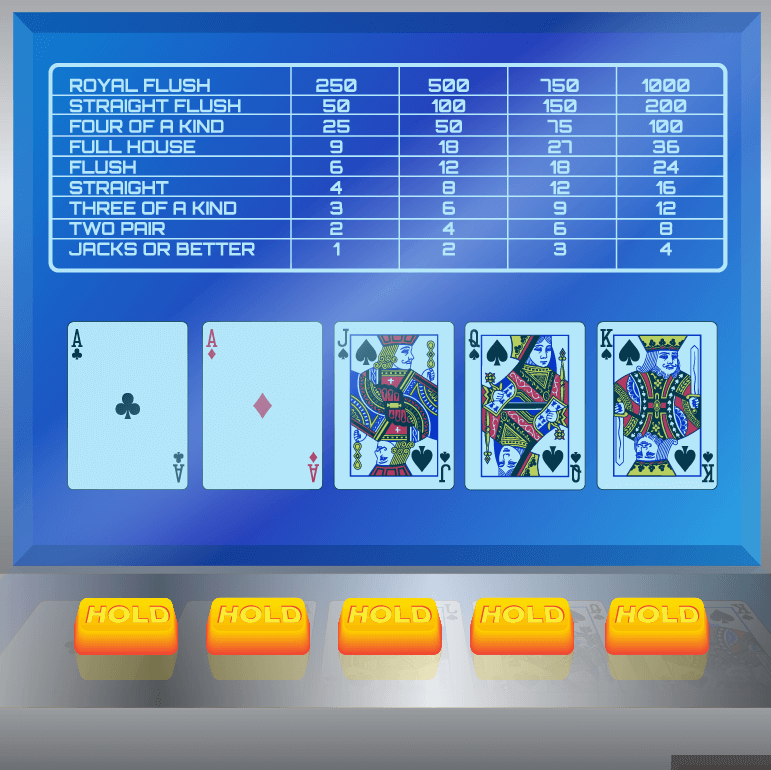
Video Poker Hand with a Pair of Aces

JACKS OR BETTER – FULL-PAY (9/6)

  • Single-play variance: 19.5. 
  • 3-play variance: 23.4 – a 20 percent increase. 
  • 5-play variance: 27.4 – 40 percent greater than single-play. 
  • 10-play variance: 37.2 – 90 percent greater than single-play.
  • 50-play variance: 115.8 – 490 percent greater than single-play.
  • 100-play variance: 214 – nearly 10 times the variance of the single-play version game.

BONUS POKER – (8/5)

  • Single-play variance: 20.9.
  • 3-play variance: 25.1. 
  • 5-play variance: 29.4. 
  • 10-play variance: 40.0.
  • 50-play variance: 124.8.
  • 100-play variance: 230.8.

DOUBLE BONUS POKER – (10/7)

  • Single-play variance: 28.3.
  • 3-play variance: 35.0. 
  • 5-play variance: 41.8. 
  • 10-play variance: 58.8.
  • 50-play variance: 194.4.
  • 100-play variance: 364.0.

Those variances can, indeed become extremely high. What do they mean to you, the average video poker player? 

The more knowledge you have about the game you are playing, the better prepared you are to enjoy the game. If you are planning to play multiple-play video poker you will need to bring a larger bankroll in order to play as long as could on a single-play game. Even on the relatively low variance Jacks or Better, the variance of the 100-play game is 10 times that of the single play game. This means that even if you were to play a lower denomination multiple-play version of the game you still may need a larger bankroll.

For example, if you normally play single-play Jacks or Better at the $1 level, it may seem logical that you could play 100-play Jacks or Better at the 1¢ level. After all, playing at the maximum coin-in the wager is five dollars on each total hand in either game. But, by looking at the increased variance for 100-play (10 times or more than that of single-play), it is easy to see that the same bankroll will not nearly be enough.

Keep in mind that variance can be good or bad. When riding the wave of positive variance, life is very good indeed. However, when wallowing in the pit of negative variance, life is very tough. It is always a good idea to make sure you have a large enough bankroll when you gamble. Keep your casino experiences enjoyable. Even though you do not have to learn a different strategy to play a multiple hand version of your favorite game, make sure you bring a large enough bankroll with you if you are planning to play multiple-play video poker.

February 14, 2019

By Jerry Stich

Jerry "Stickman" Stich
Body

Jerry “Stickman” has been involved in casino gambling for nearly 30 years. He is an expert in blackjack, craps, video poker and advantage slot machine play. He started playing blackjack in the late ‘80s, learned several card counting systems and used these skills to become an advantage blackjack player and overall winner of this game. He also acquired the skills necessary to become an overall winner in the game of craps, accomplishing this by a combination of throwing skill and proper betting techniques. Stich is also an overall winner playing video poker. This was accomplished by playing only the best games and using expert playing strategy. 

Jerry used his skills to help others also become better gamblers. He has taught advantage play techniques in blackjack, craps, video poker and slot play to hundreds of students. He is a regular contributor to top gaming magazines and has authored and co-authored various books on gambling.

Jerry Stich
factcheck
Off
hidemainimage
show
Hide sidebar
show
Fullwidth Page
Off

Roulette is by far the most popular online casino game. And when you place your chips on a Roulette table betting layout you’re probably asking yourself, ‘Where is the ball going to land?’ 

But the question you really should be trying to work out is, ‘When is the ball likely to land in one of the numbered pockets you’re betting on?’ Because in my opinion, building a strategy around this likelihood is the key to winning at Roulette.  

Allow me to explain. 

  • Most players bet on numbers before the ball has been spun because they’re trying to win using previous outcomes as a guide. They’re looking for a pattern and so bet in a way that if that pattern continues they’ll win. 
  • Other players stick to the same set of numbers or
  • Devise some other form of number picking System.

Whatever method you use to try and win, (And I’m going to suggest a System of my own at the end of this article) there’re a few important key points you should factor into your overall strategy. Implementing the advice, I’m going to refer to will set you apart from most Roulette players. 

Since Roulette is a random game of chance there are many that say winning depends on luck alone. So, I’ll address this point first.

LUCK

There’ll be times playing Roulette when you feel invincible, no matter the speed of the ball or the rotation speed of the wheel or the way the ball lands into one of the pockets, the outcomes will work out for you as if you were just meant to win. 

There will always be Roulette players that experience lucky days, but the problem with luck is it cannot be used as a method because you can never know when this form of luck will appear. 

Roulette players placing their bets

If you sense you’re on a lucky streak you could take full advantage by increasing your wagers as you’re winning and of course up until your luck vanishes. Being lucky is making profits spin after spin or when there’re only a few losses in-between wins. During these times you could also maximise your profits by increasing your wagers following a few losing results. In this way you’re turning outcomes into wins because you’ve managed your bankroll positively during the dominant cluster of those wins you’ve encountered. 

But let’s be under no illusions about Roulette, for it’s not so much a game about mysterious luck alone, but a game about the method or System you’ll use and moreover all about ‘timing.’ 

If a method works well when you’re using it, you’ll be in luck. You’ve heard the expression, ‘you make your own luck.’ Making it work for you on Roulette games is not only possible but using the right method and managing the highs and lows (within the timing: number of losses before wins and vice versa) will result in you being lucky and winning more often. 

THE PLAYER’S EDGE

Does one exist? If so it would contradict the house edge that is firmly established in mathematics. It doesn’t seem possible that a player can have an edge. I mean, unless a Roulette wheel has a bias, or you can work out where a ball might land as it’s spinning and before the call ‘no more bets’ is announced, or you can know the future, overcoming the mathematical model of the house edge is simply impossible.    

But there’s winning and there is winning. For instance, you could cover all the numbers and watch as the dolly marker is placed on one of your chips. However, since there’s 37 pockets on a European Roulette wheel and the Straight up payout is 35 to 1, having secured your 1 chip wager on a winning number along with the 35 chips you would win (total =36) you’d be losing 1 chip.

Leave out 1 number, covering just 36 numbers and you’ll be breaking even if one of your numbers is the outcome. So clearly this is not profitable. If you leave out 2 or more numbers, you can work out that the risk to reward favours the house because when you lose just once you’ll need to win lots of outcomes to recover your losses.  

IF THERE’S A PLAYER’S EDGE WHAT IS IT?

Years of forming different Roulette Systems had given me this answer. Sure, some methods are better than others and I do have my favourites, but what all good Systems have in common is they go through regular winning and losing phases. 

If you adjust your betting in line with the highs and lows of the method you’re using, you’ll generate a money management edge that’ll be reflected in your bankroll. 

Correct application gives you ‘an edge over your losses’ thus saving you losing more which results in you holding onto more of your winnings. Preventing your bankroll from being reduced keeps you in the game which means you’ll have the chip power to increase your bets when winning clusters occur. 

THE FEWER THE NUMBERS YOU COVER THE BETTER
AND THE OPTIMUM NUMBER IS NINE

There are three reasons why. 

  1. For a Roulette System to work, in my opinion it must be one where the numbers you pick go through ‘regular phases’ where wins and losses occur in clusters. If following a win there’re several losses in a row before the next win, increasing your wagers hoping to ride a streak of wins will fail and increasing your wagers (doubling down) expecting wins will also fail.

    Example 1: W/L Regular Phases occurring in clusters.

    W L W L L W W L W L L L W W L W W W L W L W L W L L

    In the above example both wins, and losses resulted 13x. Although both score an equal number of outcomes, they occur in clusters so increasing wagers following losses pays off because there’re few losses in a row. Likewise, increasing wagers following wins pays off since a win is never far away. 

    Even if I reduce the number of Wins you’ll still be profiting because you’re only covering 9x numbers. 

    Example 2: W/L Regular Phases occurring in clusters, but with fewer wins.

    L W L L L W L W L L L W L W W L L W L L

    In the above example there are only 8x wins verses 13x losses. But there aren’t many losses in a row and so there’re still clusters of wins. Therefore, increasing wagers following losses and following wins will pay off because you’re only covering 9x numbers. So, you’re in a strong position and even if I were to reduce the wins further you’re still likely to secure profits.
     
  2. Revert to covering more numbers and it follows that more wins are likely, however your profits will be reduced. Also covering more numbers means higher wagers for the times when you want to increase your bets, and this can lead to higher losses. Therefore, it’s important to stick to an average of covering 9x numbers. Depending on the System you’re using – and I’ll get to that shortly – it could be one or two numbers less or a few more. 9x numbers is a little under a quarter of a Roulette wheel. A Straight up pay-out gives you a 3 to 1 advantage. (35 plus your 1 stake = 36 less 9 = 27 i.e. 9 multiplied by 3 =27)
     
  3. Covering almost a quarter of the wheel gives you an almost 1 in 4 chance of winning. And using a method where wins and losses appear in frequent clusters means you’ll be able to (within reason) predict the likelihood of when wins are due.

TIP: Stick to the same System so that you form order into the way you bet. It doesn’t matter if you use the same set of Roulette numbers or a different set from spin to spin, but by sticking to the same System you’ll be able to regulate when and when not to bet and by how much to bet each spin. When you stick to the same System you can note down wins and losses and these will give you a sense of when wins are likely and when they’re not. 

So, the next time you bet on Roulette think of two things; ‘Method’ and ‘Timing’. If you bet with these in mind, you’ll convert would be losses into wins with in the money you’ll save.

SAME TYPE & OPPERSIT TYPE REPEATING SYSTEM

I formed this System based on the layout of numbers on the Roulette wheel and betting layout and the frequency of appearances. It was one of the first Systems I created back in the 1990s. If you read my article, you’ll know why connections on the Roulette wheel are relevant when choosing a System to follow.

Each of the 1 to 36 numbers relate to three of the six outside betting options: HIGH/LOW, EVEN/ODD, RED/BLACK. For example, #1 relates to Low/Odd/Red. But you don’t bet on the outside even chances in this System.

The System works as follows. If #1 was the last outcome you would place 1x chip on each of the following Straight up numbers that belong to the same group as #1 they are: 1, 3, 5, 7, 9 These numbers represent the DIRECT REPEAT of the SAME TYPE: (Low/Odd/Red).

Then you place 1x chip on each of the following numbers, 

20, 22, 24, 26, 28 These numbers represent a complete OPPOSITE of the group #1 falls into i.e. they are all High/Even/Black.

The theory is, a Same Type or Complete Opposite Repeat might be the next likely outcome because on a Roulette wheel they are spaced out so that when a ball returns to the same half of the wheel divided from the zero down, you have just under a 50% chance of realising a connection! 

There are eight groups of Same Type numbers on a Roulette betting layout and wheel. These are: 

1, 3, 5, 7, 9
2, 4, 6, 8, 10
11, 13, 15,17
12, 14, 16, 18
19, 21, 23, 25, 27

20, 22, 24, 26, 28
29, 31, 33, 35
30, 32, 34, 36 

Each group of Same Type numbers can be matched to Complete Opposite Types or vice versa as follows. 

1, 3, 5, 7, 9 / 20, 22, 24, 26, 28 = layout of 10x numbers
2, 4, 6, 8, 10 / 19, 21, 23, 25, 27 = layout of 10x numbers
11, 13, 15,17 / 30, 32, 34, 36 = layout of 8x numbers
12, 14, 16, 18 / 29, 31, 33, 35 = layout of 8x numbers

You will be betting on 8x or 10x numbers in total in each game. So, the average will be 9x numbers. As you can see, there’re four groups of four numbers, total = 16x and four groups of five numbers, total = 20x. 

16 plus 20 numbers = 36 divided by the 8 groups = 4.5. You’re only ever betting on two groups in each game, so 4.5 multiplied by 2 = 9.  

This is a good Roulette System because Wins and Losses occur in clusters and go through regular winning and losing phases. After 3x or max 4x losses in a row you could stop playing to ride out what could turn out to be an extended losing phase where one of the 8x to 10x numbers do not occur. This will save you losing more money and allow you time to analyse your Win/Loss notes.

When a same Type is followed by a Same Type outcome or 

Opposite Type followed by an Opposite Type or 

Same Type followed by an Opposite Type or 

An Opposite Type followed by a Same Type,

one of these connecting outcomes will be a trigger for you to begin betting again.     

I don’t recommend covering Zero because over the long run Zero outcomes have no bearing on the success of playing this Roulette System.  

There’s no perfect Roulette System since all Systems go through phases of wins and losses. But in choosing an average of 9x numbers as opposed to many more and betting in a structured way you’ll increase your chances of identifying when to bet and by how much to bet to try and maximise your profits and minimise your losses. 

The art of winning when playing Roulette is learning how to manage the ups and downs based on the advice I’ve given above. 

Login to your 888casino account and study Roulette game outcomes. You’ll see that such Same and Opposite Type patterns reoccur even though Roulette is a random game of chance.

February 12, 2019

By Stephen R. Tabone

Stephen R. Tabone
Body

Stephen R. Tabone is an English Writer from Great Britain. He is a casino games professional pattern player and outcomes systemiser. He is the Author of Bestselling Baccarat books, ‘The Ultimate Silver Bullet Proof Baccarat Winning Strategy 2.1’ and ‘The Ultimate Golden Secret Baccarat Winning Strategy 3.0’.

In 2011, Mr. Tabone earned a Bachelor of Arts degree with Honours in Creative Writing and Philosophy from the University of Greenwich, London. And holds qualifications in Law and in Business. 

Mr. Tabone has been developing and testing his rule-based gaming systems since 1997 and began publishing these in 2017. As well as Baccarat, he plans to publish books on Roulette, Blackjack and other casino games. He has a fascination with number combinations, cryptanalysis, patterns and is a strong concrete and abstract thinker. He also designs stock market trading concepts.

He is methodical in constructing powerful rule-based betting systems to combat the complex problems of finding ways to profit from randomness. Mr. Tabone’s systems help gamblers improve the way they play casino games. Back in the 90s he even bought his own Roulette Wheel to practice on.

Stephen R. Tabone

Sit back, relax, and try answering the following 20 questions in this quiz about the game of blackjack. This quiz is not solely about blackjack strategy; rather, it also covers some interesting facts and statistics about the game.

  • Give yourself five points for each correct answer.
  • If you score over 80, you really know your stuff about blackjack.
  • If you score less than 80, hopefully, the correct answers to the questions you missed will improve your knowledge of the game. (Answers are at the end of the article.)

BLACKJACK QUIZ

  1. How did the game of blackjack get its name?
  2. What important contribution did the “Four Horsemen from Aberdeen” make to the game of blackjack?
  3. What did Dr. Edward Thorp do?
  4. How frequently does a player get a blackjack hand?
  5. What is the chance that you could lose three consecutive hands at blackjack?
  6. What is the name of the event that professional card counters attend annually, and where do they meet?
  7. Which pair(s) should you always split?
  8. Which pair (s) should you never split?
  9. What is a “stiff hand” in blackjack?
  10. What is a “soft hand”?
  11. What occurs that results in a player’s “busting”? 
  12. How does the house get its edge in blackjack?
  13. What percent of the time will a dealer bust when she has a 6 upcard? (Assume playing rules are dealer must stand on soft 17.)
  14. Is it better for the player when the dealer stands on all 17’s or hits soft 17?
  15. Is a 6-5 payoff for a blackjack better than a 3-2 payoff?
  16. What happens when you surrender in blackjack?
  17. When you buy insurance in blackjack what do you get?
  18. Why do most casinos use six and eight decks of cards instead of a single deck?
  19. You wager $10 and receive a pair of aces. You split them and draw a picture card to each ace. The dealer subsequently busts. How much do you win?
  20. If the dealer has an ace upcard, what is the chance she will have a 10 in the hole and a blackjack?

ANSWERS

  1. When the card game known as “21” was initially introduced in gambling houses in America, it didn’t catch on with players. So gambling bosses implemented a 10–1 payoff bonus if a player received an ace of spades and either a jack of spades or clubs. This hand was called a “blackjack.”  The 10–1 bonus payout was eventually abolished and subsequently replaced with a 3–2 bonus payout for all initial hands of an ace and 10-value card; however, the name of the bonus stuck and to this day, the game itself is referred to as “blackjack.”
  2. The Four Horsemen were Roger Baldwin, Wilbert Cantey, James McDermott, and Herbert Maisel. In 1956, using nothing more than desk calculators, they developed and published the first reasonably accurate basic playing strategy for blackjack. The four were subsequently inducted into the Blackjack Hall of Fame by their peers for their accomplishments.
  3. Dr. Thorp is universally regarded as the inventor of card counting (known as the “Father of Blackjack Card Counting”). He published his card counting system in 1962 in the book Beat the Dealer, which quickly made the New York Times list of best-selling books. 
  4. About once in every 21 hands, or roughly 4.8% of the time. 
  5. The percent of the time a blackjack player will win a hand, lose a hand, or tie is 43.8% (win), 47.3% (lose), and 8.9% (tie). (Rules dependent.) If you discount ties, the percent of the hands won and lost is 48.1% (win) and 51.9% (lose). The chance that you could lose three consecutive hands is 51.9% x 51.9% x 51.9% equals 14%. (This, of course, is true for playing just three hands.)
  6. The name of the event is the Blackjack Ball. Approximately 110 blackjack pros (active and retired) have met annually since 2002 at a secret location in Las Vegas. You must be invited to attend, and security is tight because if a casino employee were to infiltrate the Ball, it would make his career while destroying the careers of many blackjack pros in attendance.
  7. You should always split a pair of aces or eights.  Many casual players shun splitting 8s when the dealer shows a 9, 10, or ace upcard card. However, that’s a mistake because you will lose less money in the long run by playing two hands, each with an 8, than by playing one hand of 16 against a dealer’s 9, 10 or ace upcard.
  8. You should never split a pair of 5s or 10s. In the case of 5s, you will win more, on average, by playing one hand of 10 than by splitting and playing two hands, each with a 5. Some casual players split a pair of 10s when the dealer shows a weak 5 or 6 upcard. Again, that’s a mistake because even though splitting the 10s will win you money in the long run, you’ll win more money by standing on the initial hand of 20.
  9. A stiff hand in blackjack is a hand that totals 12 through 16 and that could bust with a one-card draw.  
  10. A soft hand in blackjack is any hand that contains an ace counted as 11. The playing strategy for a soft hand with a specific total is different than a hand with the same total but not containing an ace counted as 11. (For example, a 16 comprised of A-5 plays differently than a 10-6.)
  11. A player busts when the total of his hand exceeds 21 (for example, 7-9-10).
  12. The house derives its edge in blackjack because players have to draw first, and if they bust, they automatically lose regardless if the dealer subsequently busts in the same round.
  13. When the dealer has a 6 upcard, she will bust 42% of the time on average. (This also means the dealer will make a 17–21 more often than busting.)
  14. It’s better for the player when the casino rules specify that dealers must stand on all 17s, including soft 17. If the casino blackjack rules dictate that the dealer must hit her soft 17, the house edge against the player increases slightly. The reason for the latter is that even though the dealer will bust slightly more often when she hits compared to standing on soft 17, the times she doesn't bust she will, more often, end up with a hand that totals higher than 17. The net result is the casino's edge increases by roughly 0.2%.
  15. A 6-5 payoff for a blackjack is worse than a 3-2 payoff. With the same rules, a game where players are paid 6-5 for an untied blackjack increases the house edge by 1.4% compared to the same game with a 3-2 payoff. This means if you were to wager, say $10, and received a blackjack, with a 3-2 payoff you’d win $15, whereas for a 6-5 payoff, you’d only win $12. Therefore, as an aside, you should avoid playing any 6-5 blackjack game.
  16. After a player receives his initial two-card hand, some casinos allow players to surrender their hands. When a player surrenders, he forfeits playing his hand (the dealer will place the player’s two cards in the discard tray), and he automatically loses half of his initial wager. Strategically, it’s best to surrender a hand when your chance of winning is less than one out of four hands, i.e., your expected loss is worse than 50%. This means that statistically, if playing the hand has less than a 25 percent chance of winning and, consequently, greater than a 75 percent chance of losing, you will save money in the long run by surrendering the hand instead. (See Chapter 3 in the Ultimate Blackjack Strategy Guide for a list of the hands that you should surrender.)
  17. You have the option of betting that the dealer has a ten in the hole when she shows an ace upcard. The amount that the casinos let you wager on the insurance bet is equal to one-half (or less) of the original bet. If the dealer ends up with a ten or picture card in the hole, your insurance bet pays off at 2-1 (i.e., you win the same amount as your original bet). If the dealer doesn’t have a ten in the hole, your insurance bet is lost and play continues.
  18. Casinos use six and eight decks of cards because it increases their edge over the players, and it makes card counting slightly more difficult (but not impossible). 
  19. You win $20. Most players get upset when the dealer doesn’t give them a 3-2 payout. However, a blackjack hand occurs only when the initial two cards dealt to a player are a 10-value card plus an ace. When you split aces (your initial two cards) and draw a 10 to one or both aces, you have a 21 (not a blackjack) and the payout if the hand wins is 1-1. 
  20. The dealer will have a 10 about 31% of the time (that’s four times out of 13).
February 11, 2019

By Henry Tamburin Ph.D

Henry Tamburin
Body

Henry Tamburin is one of world’s most respected blackjack experts and a world-class player. He is the author of the Ultimate Blackjack Strategy Guide, and Blackjack: Take The Money and Run. He edited the monthly Blackjack Insider Newsletter, and was a featured blackjack columnist for Casino Player magazine, Midwest Gaming and Travel magazine, Gaming South magazine, Southern Gaming magazine, New England Gaming News, Jackpot, Bingo Bugle, and Casino City Times.

He has appeared on numerous gaming shows on the Travel Channel and A&E network, and has been a guest on hundreds of radio shows. Tamburin is also a skilled blackjack tournament player, and an invited guest at the prestigious Blackjack Ball, an annual gathering of blackjack professionals.  He has taught thousands of players how to get the edge at blackjack in his seminars, card-counting classes, newspaper and magazine articles, and on his websites (smartgaming.com and bjinsider.com).

Besides is prowess at blackjack, Tamburin is also a skilled video poker and craps player. His column on video poker playing strategies appeared monthly in Strictly Slots magazine, and he also authored these books: Ten Best Casino Bets; Craps: Take the Money and Run; Henry Tamburin on Casino Gambling; and Winning Baccarat Strategies.    

Henry Tamburin earned a Bachelor of Science and Ph.D. degrees in chemistry and worked as a production and technical manager for an International Chemical company for 27 years while pursuing his avocation as a part-time professional blackjack player. 
 

Henry Tamburin Ph.D
factcheck
Off
hidemainimage
show
Hide sidebar
show
Fullwidth Page
Off

Slot machine excitement is a big part of what drives offline and the online casino industries. Big wins and bonus entertainment are the name of the game for slot players. But anticipation of new ways to play are part of the excitement too.

Casinos and their suppliers know that and they keep the new games coming. Here are some of the prime coming attractions – games you can get excited about as they make their way into casinos in 2019.

GOLDEN JUNGLE GRAND, IGT

A 75-line video slot on a grid with five reels, each four symbols deep, Golden Jungle Grand generates some statuesque payouts when icons turn wild.

When a statue symbol lands anywhere on a reel, it activates an icon displayed above that reel. As players continue to wager and spin, they’ll collect additional statue symbols. All reels that have collected two statue icons will turn wild for the 10th spin for the chance to win big. 

In the free games bonus, players can select their bonus play volatility by choosing between 25 free games with two wild reels, ten free games with three wild reels or two free games with four wild reels. And the graphics are really wild, too on CrystalCurve cabinet. 

Long a pioneer in slots with progressive jackpots, IGT turns it all up a notch with a new lock and re-spin feature.

Initially, the feature is available on two themes: Feline Fortune and Egyptian Fortune.

Collecting either four, five or six fortune link symbols in the base triggers the Fortune Link series. The difference in the requirement is your bet: Higher coin denominations mean you can launch the feature with fewer symbols

Once you’ve collected the required number of symbols, they remain locked in place during the Fortune Link feature. You then get three re-spins to collect more Fortune Link symbols.

There’s a twist: Every time you add a Fortune Link symbol, you reset to three re-spins. If you get no Fortune Links on the first two re-spins but get one on the third, the meter returns to three re-spins.

The more Fortune Link symbols you collect, the bigger your prize. Filling the entire screen with Fortune Links symbols wins the top jackpot.

SMOKIN’ HOT STUFF WICKED WHEEL

Everi: Hot Stuff, the little devil of comic book fame, was a red-hot winner in the original Smokin’ Hot Stuff slot. Now the mischievous imp with his asbestos diaper and trusty trident returns in a 243 ways to win at slot, perfect for pennies, packed with multipliers, a progressive pick bonus and progressive jackpots available at all bet levels.

The progressive pick bonus is triggered randomly after any base game spin. Players pick from 25 coins to reveal either a progressive jackpot or pitchfork symbol. Hot Stuff removes the lowest remaining jackpot each time his pitchfork is revealed, thus guaranteeing higher prizes. 

Also available is the Wicked Wheel bonus, triggered when three wicked wheel symbols land scattered on reels 3, 4, or 5. When a Hot Stuff symbol is part of a winning combination on reels 2, 3, or 4, it multiplies the winning combination by 2x, 3x, or 4x for some smokin’ payoffs. 

PENN & TELLER, EVERI

The magical duo team up in a 9-payline slot with three mechanical reels, targeted at 25-cent and $1 play.

Loaded with an innovative feature trigger and eight interactive bonuses, players get constant assistance from famous stage magicians Penn & Teller as they wonder what  will happen next. Game play incorporates some of Penn & Teller’s most famous tricks, including Vanish a Rabbit, Miser’s Dream, and Shadows. And Everi has added some magic of its own. 

In a nudge bonus, a reel nudge may be triggered after any losing reel stop where one “Penn,” “&” or “Teller” lands one position away from a winning progressive combination or where one wheel symbol is one position away from awarding the wheel bonus. Then presto! The symbol nudges into place.

The wheel bonus is triggered when three wheel symbols land on any active payline awarding one wheel spin. Wheel prizes include the mini, minor, mega, major, and grand progressives or from 25 through 250 credits. 

THE GAME OF LIFE – CAREER DAY, SCIENTIFIC GAMES

WMS Gaming, which now is under the Scientific Games corporate umbrella, had success with it’s the Game of Life slots a while back, Now, under license from board game owner Hasbro, Scientific Games creates a new land-based and online slot adventure with a new three-reel game, The Game of Life – Career Day.

Players spin the reels and travel through life while collecting credit prizes, bonuses, and jackpots. Career Day is a 3-reel, 9-line game on the TwinStar J43 with iReels cabinet. The game boasts a life-changing single-level, wide-area progressive jackpot that can be won in the base game and is part of Scientific Games’ Cash Connection or Reel Adventures  links.

The game’s centerpiece is the Game of Life Bonus where players are assigned one of four careers - a firefighter, pro athlete, construction worker or culinary chef. You then spin for paydays, raises and spins of a wheel that award moves around the game board.

Stops along the way award credit prizes, additional spins of the wheel, and extra bonuses such as the Weekend Getaway with free spins where reel 2 is Wild and all pays are multiplied by three; or the Groundhog Day Bonus where the reels spin and stop until a winning combination is awarded.

The goal is to reach the Retirement Island Bonus board game where even more prizes, multipliers, and bonuses  are available.

JIN JI BAO XI – RISING FORTUNES, SCIENTIFIC GAMES

The No. 1  game in Asia, Jin Ji Bao Xi making its North American debut with 5-reel, 243 ways game. Rising Fortunes, available on the TwinStar J43 or the new TwinStar Wave XL cabinets, includes the popular ALL UP bet structure where players can make an extra wager to buy higher-paying symbols.

One game highlight is the Jin Ji Bao Xi Feature where players pick icons to win one of four jackpots.  

If six or more Red Gong symbols displaying credit prizes land on the reels, a Feature Selection is triggered and you can choose your casino bonus. The sum of the credit prizes creates the Shou Bonus, is one of the feature selection options.  

Players also can choose between a Top Up Bonus and Free Games Bonus where eight  free games are awarded. During free games, players can win additional free games while each Gold Gong symbol that lands on the reels award the Shou Bonus. 

In the Top Up Bonus, a lock and spin feature, Gold Gong symbols award the Shou Bonus and lucky Green Gong symbols award the sum of all Gong symbols, resulting in a rising fortune. 

CASH SPIN 360, SCIENTIFIC GAMES

The latest version of the iconic Cash Spin game  is a 5-reel, 30-line game. 

The star of the show is a U-Spin Wheel Bonus where players swipe the touchscreen to spin the big wheel.  With one spin, players can win credit prizes, a Free Games Bonus or one of three near-area progressive jackpots.  If the wheel stops on the Free Games Bonus wedge, players choose from five free games scenarios where they can be awarded up to 30 free games with a corresponding multiplier of up to 5x pay. 

There is also a Money Bag Bonus which is triggered when three scattered Money Bag symbols land on the reels. Players pick one of the money bags and are awarded a credit prize, a credit prize with an additional pick, or the U-Spin Wheel Bonus.

SHOU HU SHEN XTREME JACKPOTS, AMERICAN GAMING SYSTEMS

The Asian-themed Shou Hu Shen is based on the good luck and guardian lions along with four progressive jackpot levels. Together, they  promise fun and the chance to win big.

Featuring fireworks and sparks animations that add excitement to gameplay, Shou Hu Shen can award massive progressive jackpots. The Jackpot Pick Bonus is randomly triggered any time a Wild symbol lands on the reels during base-game play. Players touch and pick from 12 Lucky Fu symbols until they get three matching progressive symbols to win one of the four jackpots. 

During the Free Games Bonus, which is triggered by three or more Bonus or Wild symbols in any position on each of reel one-three, the number of free spins that can be won depends on the reel configuration selected by the player – 243 ways to win gets 15 free spins; 1024 ways to win gets 10 free spins; and 3125 ways to win gets five free spins.

MAYAN CHIEF GREAT STACKS, KONAMI GAMING

Mayan Chief, a Konami favorite, gets a fresh look with six reels, each five symbols deeo, on the curved Concerto Crescent and tall Concerto Stack cabinets.

Mayan Chief Great Stacks is a 60-line game that features Action Stacked Symbols and top free game awards. Action Stacked Symbols are hidden at first, but once all reels are stopped they transform into matching symbols – part of the fun is waiting to see if your Action Stacks will match symbols already on the reels to form winning combos.

A free games feature gives you up to 15 free spins with a 2x multiplier. And for extra bonus excitement, players get to choose their event in the Balance of Fortune feature. When  Balance of fortune launches, you can choose regular free games, a random credit prize, or super free games combinations with different combinations of more or fewer free games matched with lower or higher multipliers.

January 30, 2019

By John Grochowski

John Grochowski
  • ">
  • Body

    For nearly 25 years, John Grochowski has been one of the most prolific gaming writers in the United States. He’s been ranked ninth by GamblingSites among the top 11 gambling experts at Gambling Sites and his Video Poker Answer Book was ranked eighth among the best gambling books of all time.

    He started a weekly casinos column in the Chicago Sun-Times at the beginning of 1994 and He soon found himself in demand by a wide range of publications. He has written for casino industry professionals in Casino Executive and Casino Journal magazines, and for players in Casino Player, Strictly Slots and many other magazines.

    John’s twice-weekly columns appear in Casino City Times, Atlantic City Weekly and several websites. He has written six books on casino games, including the “Casino Answer Book” series. And, of course, John is a regular at 888casino Blog.

    Today John’s work includes a weekly column on baseball metrics for the Sun-Times. He lives in the Chicago area with Marcy, his wife of 30 years.

    John Grochowski

    So, you want to play offline or online Roulette but not sure what system to try. You’re reading the right article because I’m going to explain how anyone of the following three Roulette systems will help you engage with the game better while having fun watching as you try to win.

    The 3 Roulette Systems are: 

    1. The red or black percentage chaser
    2. Single column or dozen power betting
    3. Even chances best of three

    These Roulette systems are my own and designed so that you stand a good chance of winning whilst minimising the risk of losing your bankroll.

    Before I refer to the systems proper it’s important to set aside an amount of money you’re prepared to lose just in case you happen upon a set of outcomes to don’t match to your betting selections. This set amount will act as your Bankroll for the day or session of play. Professional Roulette gamblers use bankrolls to regulate their profit and loss ratio. 

    It’s no fun losing so when the fun stops and moreover you’re bankroll wiped out, it’s time to call it a day. There will be better days so allow your bankroll to guide you on how well you’re doing; when you should stop gambling when you’re in a winning situation.  

    Managing your Bankroll

    What do I mean by this? Well…playing a Roulette system is one thing and managing your bankroll is something else. Combine the two things together and you’re in a stronger position because you’d be betting along with a plan. 

    You see, a bet selection and money management are two separate aspects of any Roulette system. For example, some Roulette systems refer to how much you should wager when you’re winning or losing, as well as when to stop betting, but will fail to inform you about what to bet on. Whereas other Roulette systems will explain a betting selection but will leave out the wagering information. 

    One without the other equates to an incomplete system. For a system to be sound it should refer to both aspects, and the author of the system should know its strengths and weaknesses and include such information when explaining how the system works in practice.

    SYSTEM #1: THE RED OR BLACK PERCENTAGE CHASER

    Strapped for time and don’t really believe pattern betting works? Then this even chance percentage chaser system is an all-in win, lose or draw method that you can replicate daily. 

    Here’s how it works. First decide how much your willing to risk. Let’s say you allocate $100. Now choose one of the colours, Red or Black or if you prefer one of the other even chance options; the High/Low or Odd/Even. 

    I prefer to use one of the colours because the result will stand out right away and the coloured pockets on a Roulette wheel are evenly spaced out which means that, theoretically the chances of one colour occurring over the other is nearer to a true 50:50 possibility. Let me explain what I mean. 

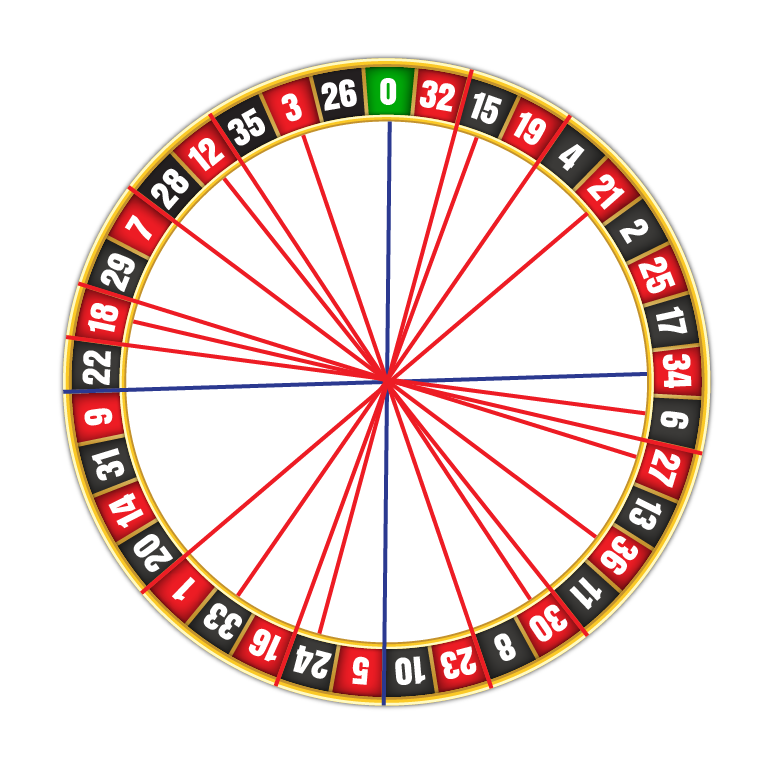
    Look at a European Roulette wheel. The #10 and #5, are two Low numbers that are together as pairs on the wheel. Numbers #26 and #32 as High numbers would be together except that Green Zero separates them. This constitutes a bias. Though how it might alter betting results at any given set number of outcomes no one can know. But it’s clear this unfair layout isn’t as evenly distributed as are the coloured pockets on the wheel. 

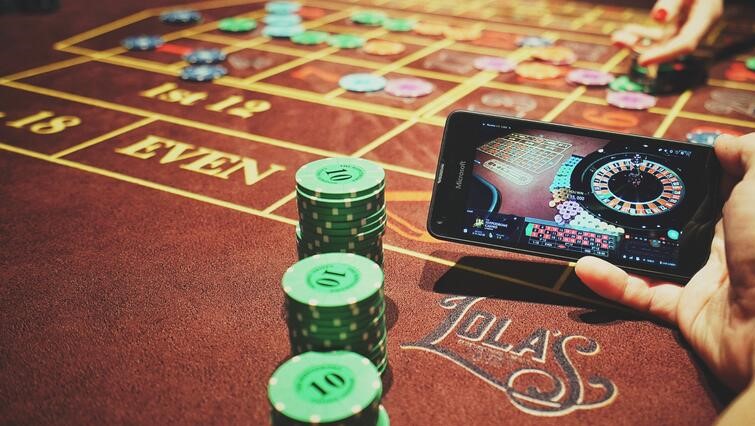
    Roulette table with wheel and layout

    And now look at the sets of Roulette Odd numbers that are spaced out into pairs on the wheel: 

    #15 and #19, #25 and #17, #27 and #13, #33 and #1, #31 and #9, #29 and #7, #35 and #3 Total sets = Seven

    And the sets of Even numbers in pairs:  

    #34 and #6, #30 and #8, #24 and #16, #20 and #14, #22 and #18, #28 and #12 Total sets = Six plus #26 and #32 though these two numbers are separated by Zero so can’t technically be regarded as a pair set.  

    Of the above sets, if you look at the wheel with the Zero at the top, there’re four Odd and four Even sets to the left side of Zero AND three Odd and two Even sets to the right side of Zero. #26 an Even number on its own to the left of Zero and #32 even number on its own to the right of Zero.

    While there’re four Odd and four Even sets to the left side, = eight sets, this means there’re only five sets to the right side, three Odd sets and two Even sets. Aside from the #26 and #32 numbers split it’s clear that the left side of the wheel contains more, Odd and Even pairs. Fascinating isn’t it! 

    While you might argue that there is no left or right side of a wheel if you ignore the Zero, the fact remains there’re seven Odd pairs and only six Even pairs when considering the Zero that divides #26 and #32.

    This reinforces my reason for opting for one of the colours. On the other hand, you might think such biases will help you in some way. But for even chance systems I prefer knowing that whether I win, lose or draw it wasn’t anything to do with the bias nature of a wheels numbered layout.  

    Having allocated your bankroll amount and chosen a colour, Red or Black. You’re now going to decide how many games you want to play. Either x10 or x20. If you decide to play x10 games, then divide your $100 bankroll into x10 $10 wagers. If you decide to play over x20 games, then divide your bankroll into x20 $5 wagers.

    There’re two methods you can employ within this system. 

    1. You could play every game and settle for whatever profit/loss results at the end. You might come out level, or a few units up in profit or a few units down in loss. The maximum you can expect to win is double of your total bankroll. And of course, it’s possible you could lose all your bankroll. Though the more the set number of spins, the more unlikely it is that you’ll see a very long streak of the same colour. Thus, it might be worth selecting x10 games rather than x20. 
    2. Before playing Roulette you could decide how much you’d be happy winning. I’d be happy with say 30%. Then basically as soon as you’re up +3 units, stop playing. I prefer this option because you could be up early on, lose what you’ve won and end up losing more. Setting a target is wise and +3 units with a x10 unit bankroll is reasonable.

    Ignore the single Zero if it pays half back when Zero occurs. If it doesn’t you could, as a side bet, place 25c on zero to protect your bets. If you’re playing on a double Zero Roulette wheel, then consider covering both Zeros just enough so that if any Zero occurs you’ll cover your wagers.

    TIPS:

    • Don’t start when the opposing colour is on a run of a streak of 3 or more in a row. Start playing when your colour is on a streak or when you see zigzagged or double and single sets.
    • When you start don’t miss out games.  

    You don’t really need to over analyse this Roulette betting system. Either you’ll win or lose some games (+1 or more) or will win or lose all games or come out level. 

    SYSTEM #2: SINGLE COLUMN OR DOZEN POWER BETTING

    Choose whether you want to play Columns or Dozens. You can combine both but, so it doesn’t get too complex start off with one or the other. Let’s say you’re going to play a Column. 

    Pick one Column only; a Column you’re going to stick with. (There’re three Columns to choose from) Decide how many wagering units you want to win. I recommend +6 units. Column and Dozen betting pays 2:1. 

    Bet on your selected Column. When you win continue to bet on it again until you reach your target. 

    Strategy for Roulette Column Bet

    TIPS: 

    • When you lose twice in a row stop betting. 
    • Start betting again the game after your Column is a resulting outcome. 
    • Set yourself an overall stop loss just in case you come across a bad set of results. If you’re aiming for +6 unit wins then a unit bankroll of 12 to 15 is fair. 

    If you want to cover the Zero by just enough to protect your wager, then do so but only if you’re betting on a limited number of games because covering Zero over many spins will eat into your bankroll.

    SYSTEM #3: EVEN CHANCES BEST OF THREE

    The final Roulette system I’m recommending works well on the outside even chance options Red/Black, Odd/Even, High/Low. 

    You choose one of the outside sets and check the last three outcomes and bet on the outside chance that dominates the best of the last three results.

    Let’s say you choose Red/Black. Look at the last three outcomes, if two or more of the last three are Black your next bet would be Black. Or if two or more Reds are in the last three results then you bet Red.

    This is a basic Roulette system, but it can be very profitable when lots of zigzagged and streaks of the same colour outcomes occur.  

    TIPS:

    • Avoid betting when you see doubles RR BB RR
    • A 10, unit bankroll is needed if you’re aiming for a +3, unit win. 

    Don’t double down on any of the above Roulette systems. 

    January 29, 2019

    By Stephen R. Tabone

    Stephen R. Tabone
    Body

    Stephen R. Tabone is an English Writer from Great Britain. He is a casino games professional pattern player and outcomes systemiser. He is the Author of Bestselling Baccarat books, ‘The Ultimate Silver Bullet Proof Baccarat Winning Strategy 2.1’ and ‘The Ultimate Golden Secret Baccarat Winning Strategy 3.0’.

    In 2011, Mr. Tabone earned a Bachelor of Arts degree with Honours in Creative Writing and Philosophy from the University of Greenwich, London. And holds qualifications in Law and in Business. 

    Mr. Tabone has been developing and testing his rule-based gaming systems since 1997 and began publishing these in 2017. As well as Baccarat, he plans to publish books on Roulette, Blackjack and other casino games. He has a fascination with number combinations, cryptanalysis, patterns and is a strong concrete and abstract thinker. He also designs stock market trading concepts.

    He is methodical in constructing powerful rule-based betting systems to combat the complex problems of finding ways to profit from randomness. Mr. Tabone’s systems help gamblers improve the way they play casino games. Back in the 90s he even bought his own Roulette Wheel to practice on.

    Stephen R. Tabone

    “Dollies! Do your dealing!” In my early days as a Roulette croupier, a pit boss would declare this at the start of every day shift, before we let the punters in the door. It was always said with humour, but outside the gaming industry, the perception of croupiers as “dolly dealers” means the challenges of the job – and the skills needed to do it – go largely unrecognised. 

    There seems to be a bit of a myth that all we do is stand about looking glamorous (or suave, in the case of the male dealers). And while this is part of it, the job also requires mental agility, ambidextrous dexterity, and indestructible interpersonal skills.

    In other words, you have to do Einstein style maths in your head, while being just as nimble-fingered with your left hand as your right. (or vice versa)


    You’ll be taught the basics at your training school. Courses usually last six weeks, and the majority of the time will be spent on the game of live roulette, with up to a week of blackjack at the end (other games are usually learnt on the job). You can opt for a private training school – ideally one with links to a casino – or you may be able to enrol on a casino run training school, allowing you to earn while you learn. 

    Either way, the course is likely to follow the same format – and to come out as ready as you can be to hit the ground running, the best thing you can do is to put extra work in at home. Here’s where it can help:

    TIMES TABLES

    One of the first things you’ll be asked to do on the course is to learn your times tables – but you’ll be going beyond the ones you learnt in primary school! These ones relate to the odds on roulette, and they’ll vary from 5-1 for a six-line covering six numbers, to 35-1 for a straight-up, covering one number. In between, you’ll have corners at 8-1 covering four numbers, streets at 11-1 covering three numbers and splits at 17-1 covering two numbers. Learn all your tables off by heart from 1 to 20, so if you see 16 chips on a split, you’ll know instantly that pays 272 pieces, and if you see 14 chips on a straight-up, you know immediately that this pays 490 pieces. The more work you put in at home, the easier your time will be on the table.

    PICTURE BETS

    There are certain Roulette bets you’ll see a lot, and we call these “picture bets.” An example of this would be one chip on the straight-up (35 pieces) plus two chips on the splits (2 x 17 pieces, i.e. 34 pieces), which pays 69 pieces. In the training school, you’ll be given print-outs of all the picture bets and asked to memorise them – do it! This will improve your confidence and you’ll look more professional on the table. 


    roulette pics


    CHIP HANDLING

    You’ll be taught to “cut” chips, e.g. to separate a stack of 20 chips into four sections of five, just from the feel of it. You’ll also be taught to “chip up” which means very quickly picking up the losing chips that have been swept in from the layout, and sorting them into stacks of 20, according to colour. You’ll be timed as you do this, to get your speed up – and you’ll need to learn what 20 chips feels like in your hand. You’ll probably be given a stack of chips to take home and practise with – if you are, DO it! And if you’re not given a stack to take home, see if you can buy some online. The better you grasp the basics, the easier it will be to deal with anything else that comes at you.

    So soak up everything you can at the training school, and to really excel, here are some insider tips from those of us who’ve been there, done that.

    TIPS FOR ROULETTE DEALERS

    1. TAKE CHARGE

    “The dealer should stand in the middle of the table and command their area - take charge of the table. If you look like you’re in control then everybody will be calm because you have their trust. There’s nothing worse than a dealer who appears nervous,” says Nick, a former casino manager. This is echoed by Lexi, an experienced dealer who says, “confidence is key. If you’re nervous, never show it!”

    2. WATCH THE TABLE

    “Watch your layout when the ball is dropping,” says Richard, a former casino inspector. Richard makes this point because some dealers look at the Roulette wheel while the ball’s spinning – but you should keep your eyes on the layout at all times, only looking at the wheel when you’ve heard the ball drop. The reason for this is that players will be watching the wheel for last-second clues about where the ball will drop – and if you’re not watching the layout, they could be slipping late bets onto the winning number!

    3. TAKE YOUR TIME

    “When you’re starting out as a trainee, accuracy is more important than speed. I was a very precise dealer myself and everything I did was designed to be clear, precise and technically correct.” Nick hits the nail on the head when he points out that if you focus on getting it right, speed will come with experience.

    4. FOCUS ON YOUR GAME

    “One of my biggest gripes was the dealer looking for the next dealer that might give them a break, rather than watching the game,” says Richard. In many casinos, you’ll do about an hour and 20 minutes on the table – although this depends on the club and how busy it is that day. Generally though, you’ll know when it’s your break coming up, and it can be tempting to look out for the dealer coming to take you off. Don’t though. It looks unprofessional, and if your mind isn’t on the table, you’ll miss things and make mistakes.

    5. WORK WITH YOUR INSPECTOR

    “The main thing about roulette is the ability of both the dealer and inspector to communicate and work well together,” says Mark, a former inspector himself. Unlike the career path in some industries, everyone who works in a casino starts out as a dealer, with the potential to progress to inspector, pit boss and manager. Every inspector has been in your shoes, “so don’t be afraid to ask them for help,” says Lexi, adding, “that’s what they’re there for. And be mindful that they might be watching two or three tables, so try and sync your spins with other dealers so they can watch you properly!”

    But however well you get on, “never question what your inspector says,” advises Aga. The reason for this is that it looks unprofessional to disagree in front of players, and it undermines their confidence in both of you. So whatever your inspector tells you to do, do it - even if you think they’re wrong. If you believe a mistake has been made, speak to them privately when you’re both off the table – but never contradict them in front of customers.

    6. SPEAK UP

    “We used to announce bets loudly enough for the guy on the next table to know what we were doing – because if he could hear us, then our inspector definitely could!” recalls Nick. Announcing everything, from call bets to payouts, loudly and clearly is incredibly important. Your inspector needs to hear you over all the noise in the casino – and they need to hear you first time, because there won’t be time to repeat yourself during the spin. It’s also so the microphone on the table can pick up what you’re saying. Everything in the casino is filmed, and the audio is recorded. If you’re loud and clear enough for both the inspector and the audio to pick up what you’re saying, then you’ll always be covered in case of a dispute with a customer.

    7. MAKE FRIENDS

    “Make eye contact with the players and interact with them. Remember it’s a game and they’re there to have fun. Be their friend - be happy when they win, and sympathetic when they lose,” says former casino manager Fintan. Keeley, who’s currently a casino manager, also advises making the players your friends, explaining, “then it’s harder for them to shout at you when they lose or if you make a mistake!”

    However, while it’s great to develop a rapport with the players, it can be best not to get too close. Anna, a casino inspector explains, “if a customer’s nice and I like him, I'll usually take all his money, but if someone’s annoying and I wish they’d leave, they’ll usually win - so it’s best not to have feelings!”

    Lexi is all too familiar with this scenario, and her advice is this: “grow a mighty thick skin and practice your “faces”. In particularly the, “I’m so sad you lost” face, when the customer’s horrible, and the “well done I’m so happy” face for when a horrible customer wins!”

    January 29, 2019

    By Samantha Rea

    Samantha Rea 888casino
  • ">
  • Body

    Samantha Rea is a London based journalist and former croupier. At the age of 18, she learned to deal roulette and blackjack at a private training school in East London. She then earnt her stripes as a trainee in a casino at the Marble Arch End of Edgeware Road, a mini-Middle East in the center of London.

    Adding poker and baccarat to her repertoire, Samantha was cherry-picked to work in the company's flagship casino – an exclusive private members' club in Mayfair - where she dealt to an ultra high-net-worth clientele. After a decade in Mayfair, Samantha left land-based casinos – after squeezing in a stint as a Croupier Bunny at the newly opened Playboy Club London. Having picked up a BA (hons) in English and an MSc in Gender & the Media along the way, Samantha turned to journalism and soon found herself in Las Vegas as a reporter at the World Series of Poker.

    Samantha has written about her time as a croupier for VICE, Londonist and The Spectator. She’s brought poker to the mainstream media, writing for Coach, Red Bulletin, Forever Sports and Las Vegas Sun – as well as interviewing icon Daniel Negreanu for the last ever issue of FHM.

    Samantha’s celebrity interviews include Star Wars actor John Boyega, and she’s a regular at red carpet events such as the Empire Awards. Samantha’s real life features include an investigation into the sale of drugs online, and most notably, she has been credited with exposing the UK’s Sex for Rent scandal.

    Samantha Rea can be found tweeting here.

    Samantha Rea

    Many video poker articles that explore specific games will include a strategy chart showing the reader the best way to play the game. However, only an extremely small percentage of video poker players tend to use strategy charts while playing their favorite video poker game. There are several reasons for this.

    • They are not aware video poker strategy charts exist.
    • They think video poker strategy charts – sometimes called cheat sheets – are illegal.
    • They don’t know how to use them.
    • They are uncomfortable using them as it may take a while before the correct play is determined.
    • It might bruise their ego to have to show they don’t have the strategy totally mastered.

    Video Poker strategy charts are designed to help the player play optimal strategy. This allows them to extract every penny possible from their favorite video poker game. This article will:

    • Point out that strategy charts do, indeed, exist. 
    • Explain exactly how they should be used.
    • Show several charts for the most popular games. 


    vp machine


    First, let us dispel the misconception that video poker strategy charts are illegal. Electronic devices that determine proper plays are virtually uniformly banned. But, referring to a printed sheet for help is usually not. They are treated much like blackjack strategy cards which are not only allowed at the table, they are sold in casino gift shops. In fact, I have also seen video poker strategy cards for sale in a few of them. While some casinos may frown upon their use, this is rare, and the worst that will likely happen is a warning.

    While some call them “cheat sheets,” they are no different than blackjack strategy cards. The term cheat sheet may be used by casinos to shame people into not using them. Don’t fall for this. Using a “cheat sheet” will maximize your return allowing you to be a winner in more sessions and give you the maximum playing time possible from your bankroll.

    HOW TO USE A STRATEGY CHART

    Listed below are several lines from a full-pay (9/6) Jacks or Better video poker strategy chart. The proper way to use this chart is described immediately following it.

    The colors indicate the type of hand for which o\you are saving:

    Red – Royal Flush
    Blue – Straight Flush
    Green – Pairs, Three of a Kinds, Full House, Four of a Kind
    Purple – Flush
    Brown – Straight

    Video Poker Strategy Chart card

    To use this strategy chart, proceed as follows:

    1. Compare the hand that is dealt to the first line of the chart.
    2. If the line defines the hand, save the stated cards. 
      1. For example, you are dealt the 4, 5, 6, 7, 8, and 9 of spades (straight flush).
      2. This is a straight flush which is four of a kind or better.
      3. Save all five cards of the straight flush and hit the draw button.
    3. If the hand is not described in the line, move down to the next line of the strategy chart and then go to step 2 above.
      1. For example, you are dealt the 5, J, Q, K, and A of spades. 
      2. The hand contains four cards of a royal flush as shown in the second line of the strategy chart.
      3. Save the J, Q, K, and A of spades and hit the draw button.  
    4. Continue moving down the chart one line at a time and returning to step 2 until you reach the end of the chart.
    5. When you reach the end of the chart, do not save any cards, simply hit the draw button.

    As you can see, the process is straight forward. Compare the hand to each line of the chart starting from the top. When the line of the chart defines the hand, save those cards. Otherwise, at the end, draw five new cards. Complete strategy charts for several of the more popular video poker games are at the end of this article. 

    A WORD ABOUT PRACTICE

    Even though you could simply take a strategy chart and play the game in a casino without any practice, it pays to practice at home. Until you become very familiar with the strategy chart, play will be very slow. The more familiar the player is with the strategy chart, the more quickly and accurately the game will be played. Fast play is particularly important if the game’s return (either from the game itself or from the game and comps received) is more than 100 percent. Faster (accurate) play means more money in the player’s pocket.

    While the player can simply memorize the strategy chart of the desired game, it is better to actually practice the strategy before going to a casino in order to minimize any uncertainty. There are several computer programs and smartphone apps that mimic actual video poker play along with alerts when the wrong cards are held. I strongly recommend obtaining one of these and using it to hone your video poker skills.

    As an added bonus, many of these programs and apps allow the user to generate and print strategies for almost any variation of several game types. This is very helpful if the casino does not have any of the games which are covered by the strategy charts at the end of this article.

    SUMMARY

    Video poker strategy charts help players maximize returns from their favorite video poker games by eliminating mistakes that can cost real money. While most players are hesitant to use strategy charts in a casino, they are legal and the player should not be concerned about using them. Many players do not want to take the time and effort to practice and use strategy charts in a casino. By not doing so, they are likely giving the casino more of their hard-earned money than is necessary. Video poker strategy cards for the many popular games are available for sale on the internet. Strategy charts for many more games are also available to view and print on the internet. If a strategy chart for your favorite game is not available at the end of this article, or on the internet, you can purchase a computer program or smartphone app that allows for generating strategy charts for user-customized games. These programs and apps are also excellent methods of practicing the strategy until it is perfected.

    It is your money that is risked when playing video poker. Make sure you get the best return possible.

    January 17, 2019

    By Jerry Stich

    Jerry "Stickman" Stich
    Body

    Jerry “Stickman” has been involved in casino gambling for nearly 30 years. He is an expert in blackjack, craps, video poker and advantage slot machine play. He started playing blackjack in the late ‘80s, learned several card counting systems and used these skills to become an advantage blackjack player and overall winner of this game. He also acquired the skills necessary to become an overall winner in the game of craps, accomplishing this by a combination of throwing skill and proper betting techniques. Stich is also an overall winner playing video poker. This was accomplished by playing only the best games and using expert playing strategy. 

    Jerry used his skills to help others also become better gamblers. He has taught advantage play techniques in blackjack, craps, video poker and slot play to hundreds of students. He is a regular contributor to top gaming magazines and has authored and co-authored various books on gambling.

    Jerry Stich

    BLACKJACK WHEN TO DOUBLE DOWN GUIDE  

    In this blackjack double down guide we’ll look at what double down bets are in casino games. That includes why experienced blackjack players choose to double down on some hands and not on others. Also, what the potential advantages are for the range of double down hands versus dealer hands?

    Finally, we’ll go over the pros and cons of doubling down and the profit levels of successful blackjack double down bets.

    What are double down wagers in casino games?    

    Gamblers double down often when betting on casino games such as slots, roulette, and baccarat. You can double down on wagers when playing on blackjack too, i.e. before cards have been dealt.

    Why do players double their wagers at the start of certain casino games?

    When players get a sense their luck might change for the better they double down on their bets hoping to capitalize. Likewise, players on winning streaks seek to maximize returns before their luck dries up.

    DOUBLE DOWN WAGERS IN BLACKJACK

    Blackjack is different in that there are double down rules built into the game that allows players to double down during some hands.

    Each blackjack player bets on a box (or position) and receives two cards to start a hand total. The dealer will deal himself two cards too, one of which is dealt face down. This hidden card value forms part of the house edge because it generates ambiguous probabilities for players. Since players don’t know what the dealer’s hand total is, the key to winning blackjack and beating the dealer is determined on whether players hit or stand.

    The double down in blackjack rules appear to give players the advantage of possible winning outcomes based upon the two cards each player has been dealt versus the dealer’s upcard. If blackjack when to double down rules are followed correctly the house edge becomes weaker.

    What is double down in blackjack?

    To know what doubling down is in blackjack and the blackjack double down rules you don’t need to be an expert blackjack player. If you’re new to the game or have never played blackjack before it’s important to know what the aim of winning blackjack entails and how doubling down in blackjack can help.

    Blackjack outcomes (whether you win or lose) are mostly subject to the decisions you make. However other players at a blackjack table can also have a bearing on game outcomes. Only when the dealer’s two cards total 21 down to 17 and your final hand’s total can’t beat it, or you bust will you lose. If you draw you’ll recover your wagered chips.

    blackjack

    Where the dealer’s two cards (upcard and facedown card) total 16 or less is when the decisions you or other players at a blackjack table ultimately determine the outcome of games. Of course, you won’t know the number of the dealer’s facedown card, so you’re hoping the dealer:

    • Ends up busting – if you manage to avoid busting yourself before the dealer’s outcome is known.
    • Or the dealer’s total is 17 or 18 and you’re able to draw or better this total.

    If players hit or stand when they really shouldn’t (going against basic blackjack strategy) this could return the advantage to the dealer. For instance, if 6 or higher cards were due to be drawn, the dealer with 16 would end up busting. But if 5 or lower cards were due, the dealer’s hand could reach 21 or close to it.

    In some hands, whatever players decide (i.e., whether to stand on weak totals or drawing one or more cards to better a total), the dealer’s hand just turns out to be too strong i.e., 19, 20 or 21. And when luck is not on your side, hitting will result in a streak of busts.

    On other hands, standing on weak totals could see the dealer bust. And hitting one or more cards could see the players ending up with stronger hands and beating the dealer.

    How many cards will I get if I double down in blackjack?

    If you double down in blackjack your hand will be dealt with one additional card. So, if you felt you needed more cards to make 21 or as close to 21 as possible without busting then it may not be wise to double down. If you double down your total will include the two cards you were originally dealt plus the value of the third double-down card.  

    WHEN DO PLAYERS DOUBLE DOWN IN BLACKJACK?

    Blackjack double down rules vary depending on the online casino you play live blackjack in and the number of decks of cards in play. Some casinos will allow players to double down with:

    • hard 10 or 11 hands
    • hard 9 to 11 hands
    • hard 9 to 11 hands and all soft hands (i.e., hands containing an Ace)
    • any hand

    If you’re allowed to double down on your wager you’ll be able to after seeing your first two cards that form the start of your hand’s total. The chances of you winning against the house increase if you’re allowed to double down on most hard/soft hands and you do so against weak dealer hands.

    What are blackjack hard hands?

    Blackjack hard hands are any two cards without an Ace. So, 2 through to 10 (e.g. 7+8 will total 15). And hard hands can include pairs (e.g., 5+5 the total is 10).

    What are blackjack soft hands?

    Here is a look at all of these hands:

    • Ace+Ace through to A+10 (but A+10 is 21, a win, therefore you wouldn’t hit)
    • A+A is 2 or 12 (known as soft 12)
    • A+2 is 3 or 13
    • A+3 is 4 or 14
    • A+4 is 5 or 15
    • A+5 is 6 or 16
    • A+6 is 7 or 17
    • A+7 is 8 or 18
    • A+8 is 9 or 19
    • A+9 is 10 or 20

    Blackjack double down rules for players

    Blackjack double down rules allow doubling down on certain hands. This means players can stake an equal amount of money (or chip value) of their original wager they placed to enter a game.

    The blackjack double down rule for players is that after doubling down and receiving a third card you’ll be forced to stand on whatever the total of your hand is.

    It’s important to identify what the best double down hands are because some appear to have an advantage or higher probability of leading to a successful outcome over others. However, you should be aware that opinions differ among blackjack experts as to the correct double down blackjack strategy to use in different situations.

    There’s a lot to consider in deciding whether to double down in blackjack. For instance:

    • Limiting yourself to receiving just one additional card is unwise if you believe you could make it to 21 or close to 21 (18,19,20). This is true whether you have soft and hard hand totals that are low.
    • The dealer’s upcard.
    • What cards have already been dealt from the shoe.
    • You might consider other player’s hands on the blackjack table and what position you are at. For example, will you be hitting the first card from a shoe? If 10s are running rich you might consider whether they might continue to. And if so, will they for long enough if you are positioned at the end of a table (will be dealt last)?

    What are the best HARD hands to double down?

    • Hard 11: double down when the dealer’s upcard is 2 through to 10.
    • Hard 10: when the dealer’s upcard is 2 through 9.
    • Hard 9: Dealer has 3 through 6.

    What are the best SOFT hands to double down?

    • Ace+2 Or Ace+3: double down on any of these hands when the dealer has 5 or 6.
    • Ace+4 Or Ace+5: when the dealer has 4 through to 6.
    • Ace+6: when the dealer has 3 through 6.
    • Ace+7: Dealer has 2 through 6.

    Pros and cons and profitability of doubling down in blackjack

    When any hand is played correctly on a blackjack table, players get to squeeze the house edge to their advantage using the double down rule. However, luck plays a big part in many outcomes thus profit and loss swings are on a tight leash.

    If the house edge is narrowed to an even chance situation using double downs you’re doing well. From there on, if you can widen that advantage with a run of double down wins, enough to make a sizable profit then all the better.

    If you have h11, you can reach 21 with any 10-value card and there are four sets of 10s in each deck of cards in play. Contrast this with when you have h10, the only way you’re going to reach 21 is with an Ace. So, the probabilities of gaining profits based on winning outcomes is determined by the value of the hand you have.

    Blackjack double down casino tips

    In a six-deck game, don’t double down with soft 19 or higher. Standing increases your chances of winning since doubling could weaken the total of your hand.

    Avoid doubling down in blackjack with soft 12 (Ace+Ace). Instead split a pair of Aces because there’s a higher probability, you’ll reach 21 or closer to it than doubling a soft 12.

    bj cards

    If you double down with a soft hand you don’t need to worry about busting since the Ace in your hand can be a 1 or 11. However if the dealer is allowed to hit on soft 17 he could improve his total to beat yours. But if the dealer must stand on soft 17, you should hit rather than double down.

    Double down with soft 17 (Ace+6) when the dealer’s upcard is 3 through to 6. You’ll be hoping the dealer’s hand busts, but if it doesn’t you stand a better chance doubling down to try and better your 17 total.

    WHAT ARE THE MOST PROFITABLE HARD HANDS TO DOUBLE DOWN ON?

    The hands highlighted below are the most profitable double downs because they are over 50%. The range of percentages are based on how much profit the probability of successful double bets is likely to be. And these are calculated based on the profit percentages of original wagers.

    Player’s Hard 11 vs. the Dealer’s upcard value as follows:

    • 6 = +68% profit percentage of original wager.
    • 5 = +63%
    • 4 = +58%
    • 3 = +53%
    • 2 = +48%
    • 7 = +47%
    • 8 = +35%
    • 9 = +23%
    • 10 = +18%

    Player’s Hard 10 vs. the Dealer’s upcard:

    • 6 = +57% profit percentage of original wager.
    • 5 = +53%
    • 4 = +47%
    • 3 = +42%
    • 7 = +40%
    • 2 = +38%
    • 8 = +29%
    • 9 = +15%

    Player’s Hard 9 vs. the Dealer’s upcard:

    • 6 = +31% profit percentage of original wager.
    • 5 = +26%
    • 4 = +19%
    • 3 = +13%

    WHAT ARE THE MOST PROFITABLE SOFT HANDS TO DOUBLE DOWN ON?

    Player’s Soft 13 (i.e., Ace+2) vs. the Dealer’s upcard:

    • 6 = +20% profit percentage of original wager.
    • 5 = +13.75%

    Player’s Soft 14 vs. the Dealer’s upcard:

    • 6 = +20% profit percentage of original wager.
    • 5 = +14%

    Player’s Soft 15 vs. the Dealer’s upcard:

    • 6 = +20% profit percentage of original wager.
    • 5 = +13%
    • 4 = +6.4%

    Player’s Soft 16 vs. the Dealer’s upcard:

    • 6 = +20% profit percentage of original wager.
    • 5 = +13%
    • 4 = +6%

    Player’s Soft 17 vs. the Dealer’s upcard:

    • 6 = +25% profit percentage of original wager.
    • 5 = +19%
    • 4 = +12%
    • 3 = +6%

    Player’s Soft 18 vs. the Dealer’s upcard:

    • 6 = +36% profit percentage of original wager.
    • 5 = +30%
    • 4 = +25%
    • 3 = +18%
    • 2 = +12%

    Blackjack when to double down conclusion

    As detailed in this blackjack double down guide, knowing when to double down is key – even when playing blackjack online at 888casino. When you double down in blackjack you stand to lose more money if you win less hands. Therefore, it’s wise to weigh up the probability of:

    1. What blackjack hands are more likely to succeed against the dealer’s upcard if you double down?
    2. Winning on double down hands that return higher profit percentages of your original wager.

    For players, blackjack double down rules and adopting a good blackjack double down strategy that works can be a minefield. An increased loss of wagers will deplete your gambling bankroll. Therefore, you’ll have to be strategic in deciding when to double down.

    August 18, 2020

    By Stephen R. Tabone

    Stephen R. Tabone
    Body

    Stephen R. Tabone is an English Writer from Great Britain. He is a casino games professional pattern player and outcomes systemiser. He is the Author of Bestselling Baccarat books, ‘The Ultimate Silver Bullet Proof Baccarat Winning Strategy 2.1’ and ‘The Ultimate Golden Secret Baccarat Winning Strategy 3.0’.

    In 2011, Mr. Tabone earned a Bachelor of Arts degree with Honours in Creative Writing and Philosophy from the University of Greenwich, London. And holds qualifications in Law and in Business. 

    Mr. Tabone has been developing and testing his rule-based gaming systems since 1997 and began publishing these in 2017. As well as Baccarat, he plans to publish books on Roulette, Blackjack and other casino games. He has a fascination with number combinations, cryptanalysis, patterns and is a strong concrete and abstract thinker. He also designs stock market trading concepts.

    He is methodical in constructing powerful rule-based betting systems to combat the complex problems of finding ways to profit from randomness. Mr. Tabone’s systems help gamblers improve the way they play casino games. Back in the 90s he even bought his own Roulette Wheel to practice on.

    Stephen R. Tabone
    factcheck
    Off
    hidemainimage
    show
    Hide sidebar
    show
    Fullwidth Page
    Off

    If you are a casino aficionado then most of what I am about to share with you may be common knowledge. Still many players know this “knowledge” but for some reason when the going gets going they violate many or most of the correct rules of play.

    Don’t let that be you. Play wise; play correctly and you will have a better chance of beating the casinos at their own games. The better you play, the better your prospects. The worse you play…well, that is self-explanatory.

    COMMANDMENT #1: DON’T GO ON TILT!

    Going on tilt has a simple definition: You emotionally lose control and start betting more and more money over more and more time. You keep thinking that you must win eventually but very few players have the bankroll to sustain a truly prolonged bad streak.

    The thought that shoveling out more money will help you make the inevitable comeback is totally wrong thinking. The casino has, with few exceptions, an edge on every bet a player makes. The more money you bet over time the better chance you will be behind the curve, not in front of it.

    Tilting can actually be caused by both good and bad previous results. We rarely hear of tilting in a positive situation but it certainly does happen. I interviewed a woman named Sandra about her slot playing strategies and she told me that what caused her to lose more often than not was her propensity to try to really “increase my wins dramatically when things were going good for me.”

    If she had a good session or day or trip she would up the denomination of the machine she played to try to “cash in big time.” More often than not, the casino cashed in, not Sandra.

    Tilting is dangerous. One’s emotions must always be kept in check.

    COMMANDMENT #2: KEEP YOUR DRINKING TO A MANAGEABLE LEVEL

    There is no doubt about it; drinking relaxes us and will sometimes (and oftentimes for some players) cause us to violate our conservative playing strategies. Most adults know at what level the drinking can interfere with their thought processes. We don’t want that to happen. As it is presented in movies, being roaring drunk in a casino might sound like fun, but it rarely turns out that way for one’s bankroll.

    There is a reason why drinking is considered dangerous on the roads for drivers; those same reasons also relate to driving into the maw of Lady Luck in the casinos. 

    COMMANDMENT #3: THE ATM MACHINES ARE YOUR ENEMY

    If you have exhausted the amount of money you’ve given yourself for playing do not – DO NOT – go to the ATM. The original name of those machines was “At the Moment” and the worse thing to do when you are feeling blue from losses is to hit one of those “at the moment” machines to get more cash. 

    Aside from paying interest on the money you are taking out, the heat of battle is the worse time to think you are getting more ammunition for your side of the fight. If you have lost, take that loss with dignity and stop playing.

    This same advice applies even more so to credit card advances. The credit card companies have their own house edges against the players too!

    COMMANDMENT #4: DO NOT USE EVERYDAY MONEY FOR GAMBLING

    Everyone has money he or she uses for daily living expenses such as food, shelter, medical bills, school tuitions, care and feeding of one’s pets, cable movies. This is necessary money and should only be spent on such necessities, not on casino gambling. Your heart operation can’t wait until you have won your next turn with the dice. (“Baby needs a new coronary bypass!”)

    Put money aside in a separate account that is used strictly for gambling. This should be a small fraction of the money you make at your job, investments or business. I call this a 401G – the “G” stands for gambling. That is the wise way to proceed; losses do not hurt when they come from money that is strictly for gambling. Make regular deposits into your gambling account and you’ll never have to worry about facing the tough challenges from the casinos.

    COMMANDMENT #5: RESPECT THE DEALERS AND TIP THEM WHEN THEY GIVE GOOD SERVICE

    First, dealers have nothing to do with your winning or losing. They are merely the messengers of Dame Fortune and have no say in terms of “yeah” or “nay” when it comes to good luck. They just relate the information to you; nothing more, nothing less. The cards say this; the roulette ball landed here; the dice showed this number. They then pay you or take your money or announce a push (tie). That’s the be-all and end-all of their impact on a game.

    Just like waiters at a fine restaurant who are not responsible for what the chef puts on your plate; dealers do not cook the meal.

    Getting angry at dealers because you are having a bad streak is silly and sometimes it is embarrassing – for you! Keep your emotions in check and realize that the dealers have to handle an assortment of ploppies at their tables, so don’t let one of these ploppies be you.

    Much like other service industry workers dealers in the United States and some other venues do not make huge amounts of money. They rely on tips. If a dealer is friendly, competent and professional in his or her approach to the game and the players at their tables, then tipping them should be a part of one’s plan for the game. 

    I would not recommend over-tipping as some players do when they are having good fortune. But keep your tips reasonable whether you are having good luck or bad luck. This approach will be much appreciated by the dealers.

    COMMANDMENT #6: DO NOT GIVE PLAYING ADVICE TO OTHER PLAYERS EVEN IF ASKED TO

    Pandora’s Box let out all the evils in the world and I am quite certain that one of those evils was that of giving advice at a gambling game – even if such advice is asked for. You can’t win in such situations. If the player who receives the advice loses then it is your fault; if he wins then that is the way it was supposed to be; you had nothing to do with it.

    It doesn’t matter if the game is blackjack, baccarat, roulette, craps or any of the carnival games, be pleasant but keep your ideas and opinions to yourself.

    What should you do if someone asks you how to handle your next bet or playing decision? Point to the dealer and say, “The dealer is the expert. I’d ask the dealer for advice, not me.” 

    COMMANDMENT #7: DO NOT MOAN ABOUT LOSSES OR EXPLODE IN JOY WHEN YOU ARE TRIUMPHANT

    This is something many gamblers don’t seem to understand. When things are going right or wrong for them, they are under the mistaken assumption that other people care about them as opposed to caring about themselves and their own fortune or misfortune.

    Do not complain to other players about your fate on a given day. They don’t want to hear it. Do not brag about how much you have won or moan about how much you have lost. Do not blame the dealers or the other players for your losses.

    At blackjack many players think the decisions you make on a hand will severely impact them when, in fact, the decisions of the other players are irrelevant. If someone complains about how you play and how you are changing the order of the cards, ask them to tell you what card is about to come up next and after that one and after that one and so on. If they can do that mental feat then everyone at the table will benefit by that psychic’s insights into the future. Of course, it won’t happen.

    COMMANDMENT #8: PLAY PROPERLY BASED ON THE RULES OF THE GAME YOU ARE PLAYING

    All games have their methods of play and the player must follow them. At roulette the dealer will tell you when to place your chips on the layout and when to collect your wins. In craps players must make their bets when the dice are in the middle of the table and not when a player is about to shoot them. In face-up blackjack games no one other than the dealer is to touch the cards. 

    If you are a new player perhaps reading a book on the games you wish to play would be very helpful for you. New players are not in and of themselves annoying except if they upset the orderly flow of a game.

    COMMANDMENT #9: DON’T FORGET THE PROPER STRATEGIES FOR THE GAMES THAT YOU ARE PLAYING

    There are better and worse ways to play just about every game in the casino. Not all strategies can give the players an edge over the house; in fact, almost none do. However, a player can reduce the hit on his or her bankroll by betting low house-edge bets. There are plenty of ways to save your money at the games you wish to play. Even if you are losing playing conservative techniques if you suddenly switch to terrible bets to get their big payouts is a major mistake. Usually the bigger the payout for a wager means the house edge is greater than average

    COMMANDMENT #10: DO NOT ALLOW THE CASINO TO DICTATE WHEN AND HOW YOU WILL PLAY

    At home before you go on a gambling trip give some serious thought about what game(s) you should play; how much you should bet at the game(s), the proper strategies and how long you will play at any given session. It is important and worth repeating: Decide the proper strategies you will use based on the lowest possible house edges at the preferred game(s). 

    Do not wait until you hit the casino to make playing and bankroll decisions. It may be too late for you then. The casino has a fierce 24/7 rhythm and no player can compete with that; but that rhythm can throw even experienced players for a loop if they aren’t careful.

    It is not so easy to formulate a strategy at home with worries about work or family or whatever movie or sporting event is about to be shown on television. The tendency is to allow all the other aspects of life to stop you from planning your casino playing strategy. If you have to lock yourself away to have the discipline to work out how it should all go down, then do so.  

    Trust your playing instincts when you are sober and at home, not when you are in the whirl of the casino. 

    Bet in haste, repent at leisure.  

    Okay there you have it, 10 basic commandments that should help you avoid disaster and allow you to enjoy a pleasant pastime. Casino gambling does have its pitfalls but these can be avoided or at least reduced. There is no reason for the games of the casino to hurt you in the game of life. 

    All the best in and out of the casinos!


    *Credits for main photo in this article belongs to Eran Alergant

    January 14, 2019

    By Frank Scoblete

    Frank Scoblete
    Body

    Frank Scoblete grew up in Bay Ridge, Brooklyn. He spent the ‘60s getting an education; the ‘70s in editing, writing and publishing; the ‘80s in theatre, and the ‘90s and the 2000s in casino gambling.

    Along the way he taught English for 33 years. He has authored 35 books; his most recent publisher is Triumph Books, a division of Random House. He lives in Long Island. Frank wrote the Roulette strategy guide and he's a well known casino specialist. 

    Frank Scoblete

    On October 23rd 2018 a Lotto drawing in the US yielded a series of numbers that would cause those that match the numbers to gain the largest single win in the history of the Lottery. There was a single winner for the drawing that won a staggering $1.53 Billion dollars. A lottery is a form of gambling; and, in fact, it is merely a variation and scaled up version of the casino staple game Keno. If we adhere to the axiom of advantage gaming that states any game is beatable given the right circumstances, then we conclude that the Lottery and Keno is mathematically exploitable, in certain circumstances.

    The underlying mathematics for each game is the same but the approaches were taken to attack each game varies. After a brief discussion of the foundational mathematics, I will discuss a few ways to approach each game that minimize risk and maximize the chance for success.

    COMBINATIONAL MATHEMATICS

    The Lottery and Keno are governed by a branch of mathematics called Combinational Mathematics. This means that there is a set of numbers; like 1-100, from which a subset; for example of 9 numbers are chosen. In Combinational Mathematics the order of the numbers does not matter.

    The following formula is used to determine the total number of combinations that exist for any given set of numbers and the subset of numbers.

    A formula to determine the total number of combinations that exist for any given set of numbers and the subset of numbers

    This formula can be applied to both the lottery and keno for analysis. The more complex of the two is the lottery application because in addition to the combinational computation the result must be multiplied by the number of Mega Ball number whereas the keno application only applies to the combinational computation. Applying the equation to the Mega Millions Jackpot and multiplying by the Mega Ball variation the odds of winning a Mega Millions jackpot are 1 in 302,575,350. The odds are definitely not in your favor.

    The Keno odds are not as bad but they are still pretty awful. Now that a firm understanding of the probabilities have been established we can begin to analyze how to increase the chances of winning at these lottery based games. The approaches for Keno and the Mega Millions games are different so we will attack them one at a time.

    The game of Keno

    KENO

    Keno is a game that has long been found in offline and online casino games. It is a tremendous earner for the casino. And depending on the variation you play the house advantage can range from just under 4% to over 35%. At the highest house edge, the casino keeps 35 cents for every dollar wagered.

    Keno can be attacked in only one way and only on very specific games with high payouts. As one can guess when a player bets every combination they are guaranteed to win the jackpot. The problem is that the cost per ticket multiplied by the number of combination exceeds the amount of the win, making attacking the game in this way a negative expectation game.

    There has been only one instance of a player who has ever beaten Keno in a methodical manner. The Australian native and blackjack hall of famer, Zjelko Ranogajec completed this task. In 1994 Ranogajec reportedly won a $7.5 million Keno jackpot at the leisure and entertainment complex North Ryder RSL Club, of New South Wales, after reportedly betting "significantly more than $7.5 million" to win it but coming out ahead on account of the additional, smaller prizes awarded along the way to the jackpot. The smaller prizes are made up of tickets where only partial number sets were matched. This approach is very costly and most players don’t have the financial resources.

    LOTTERY

    The lottery and specifically the Mega Millions jackpot where so many combinations are possible there are several ways to approach the game that would give the player a higher expected value (EV) or reduce the overall financial risk to the player.

    To increase the EV of the ticket the first step is to only play the game when the jackpot is exceptionally large. The jackpot on October 23, 2018, exceeded $1.5 billion. However, this amount is not the true amount that the winner can expect. The $1.5 billion is the amount of the payout over a 30 year period. The one-time lump sum would be approximately $1 billion dollars. The one-time lump sum is then subject to taxes, this would further reduce the net amount to somewhere in the neighborhood of $600 million. As we stated before the number of stated combinations is just over $302 million.

    Lottery Form

    The price of each ticket is $2. For each ticket to have a positive EV the jackpot would have to exceed $1.billion dollars. Evaluating the jackpot correctly to ensure positive EV ticket is step one. Step two is to choose less common combinations so that if the combination of numbers that you do choose hits the jackpot, then the winning ticket has a low probability of sharing the winnings with other players.

    Some players apply the quick pick method which applies a random number generator to pick the combination of numbers. The likely hood of two sets of random numbers coming up back to back is very low. But choosing your own numbers has its benefits; particularly if the set of numbers consisting of high numbers (numbers over 31). This is because the players that select their own numbers use numbers that they are familiar with; Mostly birthdays. These numbers fall below the number 31 thresh hold. So using high numbers gives the player distinct advantage of not sharing the top prize when it wins.

    Another common approach is risk sharing. The probability of a single person winning the top prize is for all practical purposes zero. Pulling funds is a common practice among groups. The risk goes down. It is still is very close to zero but the number of chances to hit goes up by several factors. The reason we play only when jackpots are exceptionally high is that when we employ risk-sharing approaches a winning ticket is still 10s of thousand times the price of the initial investment. Using the risk sharing approach a lower risk is still associated with a life-changing event.

    Winning the Lottery or Keno are low probability events. Understanding mathematics and using the approaches discussed here can lower the house edge and give the player a better chance to maximize their chances of winning.

    January 8, 2019

    By Nicholas Colon

    Nicholas Colon
    Body

    Nicholas is a 17 year veteran of the casino gaming industry. He is former player manager with the infamous MIT Blackjack teams and is a regular attendee of the Blackjack Ball, a gathering of the world’s top professional gamblers.

    He is the Managing Director of the Alea Consulting Group, a leading gaming consultant company with a focus on gaming economics and, is a frequent contributor to world class business publications like Forbes and Entrepreneur magazines’ and over 15 gaming trade publications. He is also the founder of Casino Exploits a player centric casino gaming site.

    Nicholas has lectured at major US universities like Clemson University, Michigan State University and Duke University. His vast business and gaming  expertise, is supplemented by post graduate degrees in Medicine, Business Administration and Applied Physics.
     

    Nicholas Colon